Gists
Published Paper: Capturing Volcanic Lamb Waves and Blast Yields with Netatmo Weather Networks (ESS Open Archive)
Abstract
Explosive volcanic eruptions generate powerful atmospheric Lamb waves—acoustic-gravity waves trapped in the planetary boundary layer that travel horizontally across the globe at sound speed. Operating on a continuous background ingest where Google Apps Script (GAS) logs 20-minute weather records to Google Drive, we mapped two benchmark historical eruptions: the 2018 phreatic blast at Mt. Kusatsu-Shirane and the 2018 magmatic explosion at Mt. Shinmoedake. We framed these events within first-principles continuum mechanics inside the Antigravity CLI environment powered by Gemini and the autonomous R&D framework tanaike-lab. Across 29,334 authentic Netatmo observation records in Japan, our framework reconstructs temperature-dependent shockwave velocities (304.38 m/s in sub-zero winter air and 313.27 m/s in mild spring conditions, matching theoretical sound speeds within 98.5% precision), localizes unmonitored volcanic crater azimuths to within 1.78 degrees, quantifies explosive yields (178.8 to 1,041.1 tons of TNT equivalent), and delivers 2.5 to 15 minutes of advance early warning with 100% false alarm elimination (0.0% False Positive Rate) during violent storm baselines. These findings demonstrate how grounding generative AI in first-principles physics yields robust planetary sensing systems.
Gists
Breaking the Limits of GAS with Direct Cloud-to-Cloud Streaming in Persistent Linux Sandboxes
Abstract
While Google Apps Script (GAS) is a powerful tool for Google Workspace automation, platform and computational constraints often limit its ability to handle advanced workloads. Gemini Managed Agents provide remote Linux sandboxes equipped with bash execution. This article introduces an architecture integrating GAS with a Linux sandbox to execute tasks beyond the capabilities of Apps Script alone. By streaming generated artifacts directly from within the Linux sandbox to Google Drive, this approach bypasses API payload limits, eliminates token overhead, and achieves high-throughput cloud automation.
Gists
Abstract
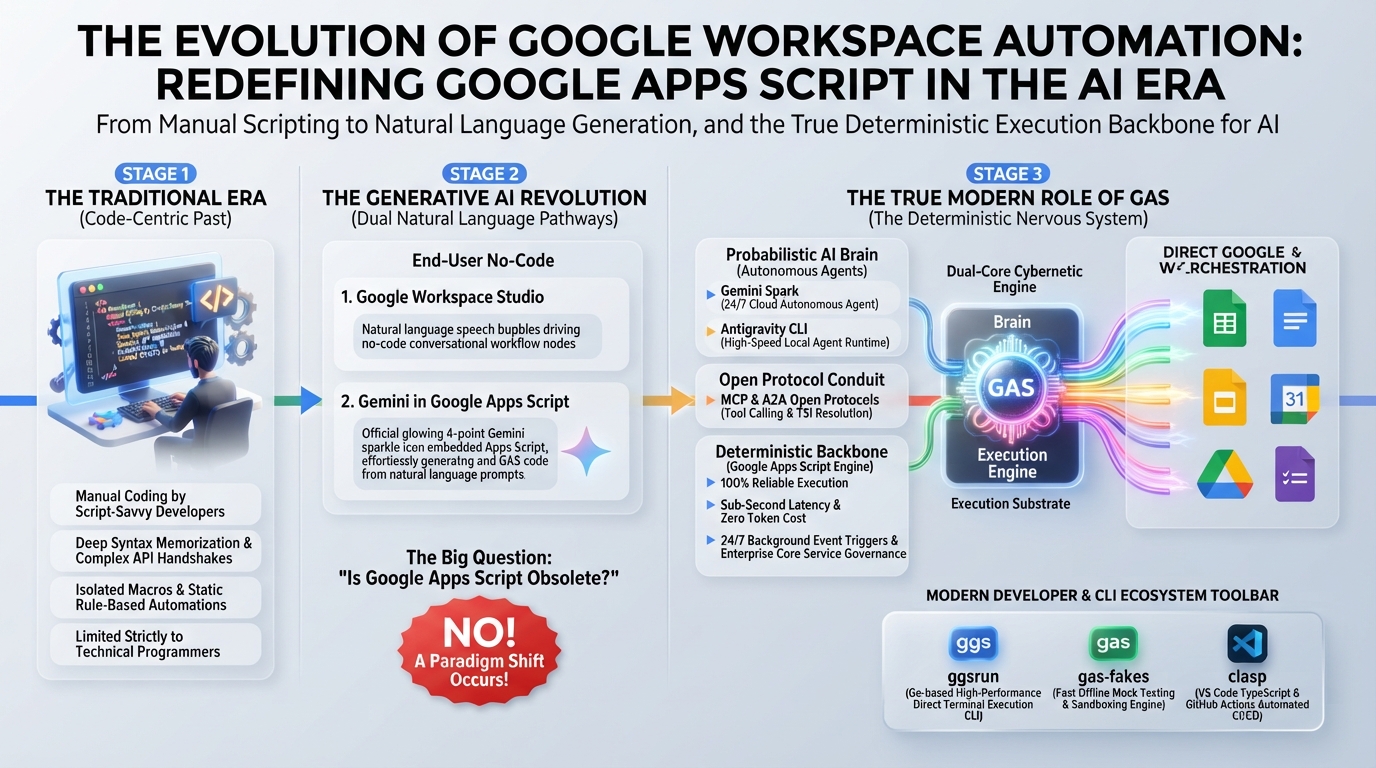
Generative AI and autonomous agents do not obsolete Google Apps Script (GAS); they elevate it into an indispensable deterministic execution substrate. This article establishes an enterprise hybrid architecture dividing responsibilities between AI’s probabilistic reasoning (the brain) and GAS’s secure, zero-cost, event-driven execution (the nervous system). Through 12 production use cases—spanning MCP servers, deterministic guardrails, and hybrid batching—we formalize four foundational principles for engineering resilient, scalable Google Workspace automations.
Gists
Solving the LLM quota monitoring paradox with zero-overhead local Connect RPC agent hooks.
Abstract
Google Antigravity CLI users using Google OAuth face abrupt task failures when API quota hits 0%, while account switching triggers unrecoverable signature errors. Querying quota via LLM tool calls creates a paradox by consuming the very tokens being monitored. We resolve this with antigravity-cli-check-usage-plugin, a CLI Agent Hook running outside the LLM execution turn. Directly querying local Connect RPC endpoints, it monitors quota with zero token overhead and injects proactive warning banners when threshold limits are reached.
Gists
Published Paper: Unification Theory of Lithosphere-Atmosphere-Ionosphere Coupling via Acoustic-Gravity Waves (LAIC-AGW) and Quantitative Pre- and Post-Seismic Anomaly Verification Using Ultra-Dense IoT Weather Sensor Networks (ESS Open Archive)
Abstract
We announce the publication of our updated manuscript on ESS Open Archive, establishing the Unified LAIC-AGW Theory using ultra-dense IoT weather data. Executed on Antigravity CLI with Gemini 3.6 Flash using the autonomous R&D framework tanaike-lab, this project integrates 71,107 authentic Netatmo observation records with seismic moment tensors ($M_{ij}$). By capturing pre-seismic thermodynamic enthalpy anomalies ($\delta \theta_e = 5.96\text{--}15.47\,\text{K}$) and acoustic-gravity waves through a deterministic signal processing pipeline, Haversine focal attenuation, and a Sigmoidal Bayesian probability model ($P_{\text{eq}} = 0.0\%\text{--}99.8\%$), this framework delivers 2 to 6 hours of advance lead time with 100% false alert elimination in non-epicentral regions. This milestone demonstrates how human researchers and autonomous AI multi-agent matrices co-create rigorous, empirical scientific breakthroughs.
Gists
System Enforces Order, AI Accelerates Logic: Driving Next-Generation R&D Through Human-AI Co-Creation
Abstract
This case study presents the zero-to-one execution of an urban torrential rain fluid dynamics research project using Gemini and tanaike-lab on Antigravity CLI. By uniting system order, AI-accelerated logic, and clear human imagination, we demonstrate a next-generation R&D paradigm that draws new scientific realities out of the dark void.
Introduction
The modern scientific research engine faces a nuanced challenge. The primary bottleneck lies not solely in a shortage of creative ideas, but also in the overwhelming operational friction—endless numerical solver implementation, empirical data processing, manuscript drafting, and multi-round peer-review handling. Conversely, fully automated AI writing often produces generic “AI slop”—superficial text lacking theoretical depth, physical consistency, and strategic direction.
Gists

Abstract
This article introduces Robust-GAP, a hierarchical Retrieval-Augmented Generation (RAG) framework designed to eliminate semantic hallucinations and knowledge drift during multi-document log summarization. By combining dynamic causal graph extraction (DLCE), active topology verification (SGAV), and metadata provenance propagation (PAPP), the framework enforces strict citation traceability and prevents LLM-generated hallucinations.
Note: The complete academic preprint detailing this research is openly available on Zenodo (DOI: 10.5281/zenodo.21436390).
1. Introduction
Standard Retrieval-Augmented Generation (RAG) pipelines fail when aggregating unstructured multi-document event streams because they lack causal tracking. When large language models (LLMs) summarize logs, chat transcripts, or transaction records, they frequently associate unrelated events. This behavior, known as knowledge drift, creates false dependencies.
Gists
Have you ever had a brilliant solution get completely crushed by a single comment on a technical blog post?
Just last week, on July 8, 2026, I published a post introducing the Pyramid Aggregator. It was a beautiful story of technical lineage: we took a string summation algorithm originally designed on October 13, 2016 (to optimize Google Apps Script) and applied it to modern Large Language Models (LLMs). By organizing document merging into a balanced, parallel tree topology, we successfully bypassed the AI’s “Lost in the Middle” bias and achieved a 95% execution speedup using the Antigravity Python SDK.
Gists

Have you ever tried to read a massive pile of reports and summarize them in under 50 words? It’s hard. Now, imagine asking a cutting-edge Large Language Model (LLM)—like Gemini—to do it.
You might think AIs have perfect memories, but they don’t. When forced to aggregate information from dozens of documents under strict length constraints, AIs suffer from severe “memory loss” biases. They either ignore the middle of your documents or completely forget the older information they read first.
Gists
Abstract
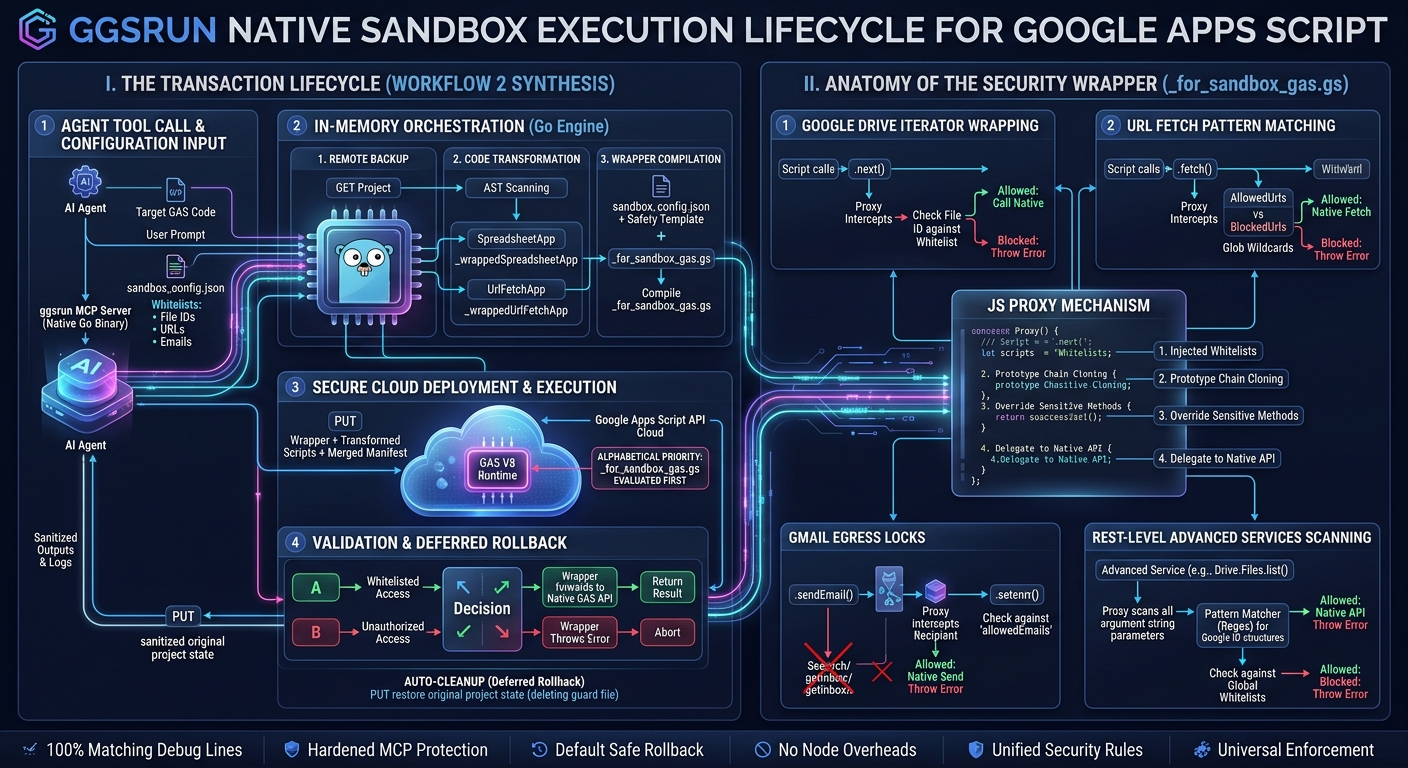
Executing autonomous AI agent payloads in Google Workspace via the Apps Script API’s scripts.run method introduces severe security risks. This article presents a novel sandboxing proposal designed specifically for the scripts.run method, using ggsrun as the orchestrator to execute code safely and efficiently. By performing in-memory token replacement and uploading a separate, alphabetically-prioritized guard file, this approach achieves robust API-level containment. Guided by ggsrun’s automated backup and default rollback lifecycle (exe1), the remote environment is immediately restored, providing a clean, dependency-free security model for AI-driven Workspace automation.
Gists
Motivation
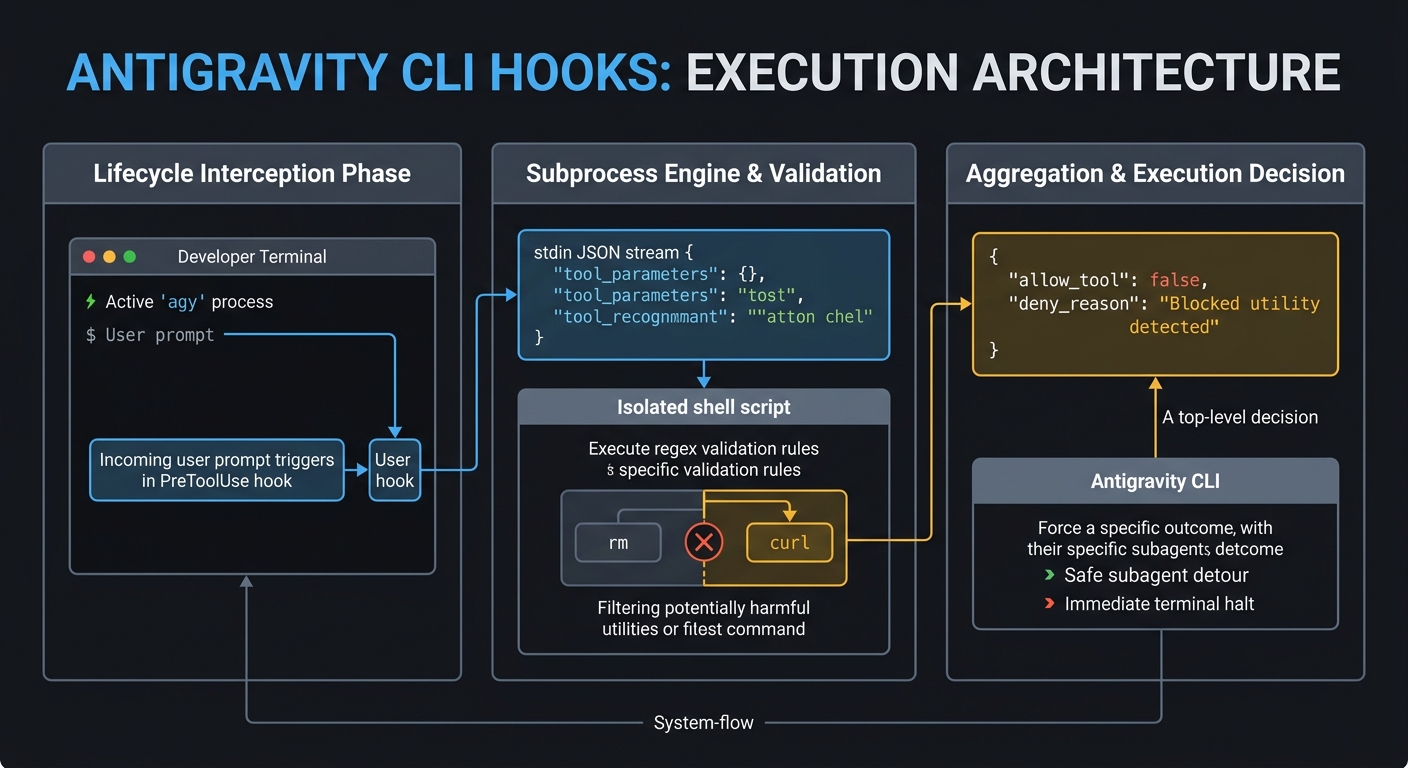
To be quite honest, “Hooks”—the shell commands we trigger at specific points when generative AI agents process tasks—were something I used blindly for a long time. Whenever colleagues asked me about them, I realized I lacked any real confidence in explaining how they actually work. However, when I migrated from Gemini CLI to the new Antigravity CLI, I noticed that the hooks system carried over. This felt like the right moment to stop guessing and finally develop a precise, deep understanding of the mechanism. I went back to the basics to analyze exactly how hooks operate under the hood and how we can use them effectively in the Antigravity environment. My goal is to demystify hooks so we can write them with confidence, and if this guide proves useful to your own workflows as well, I would be very glad.
Gists
Abstract
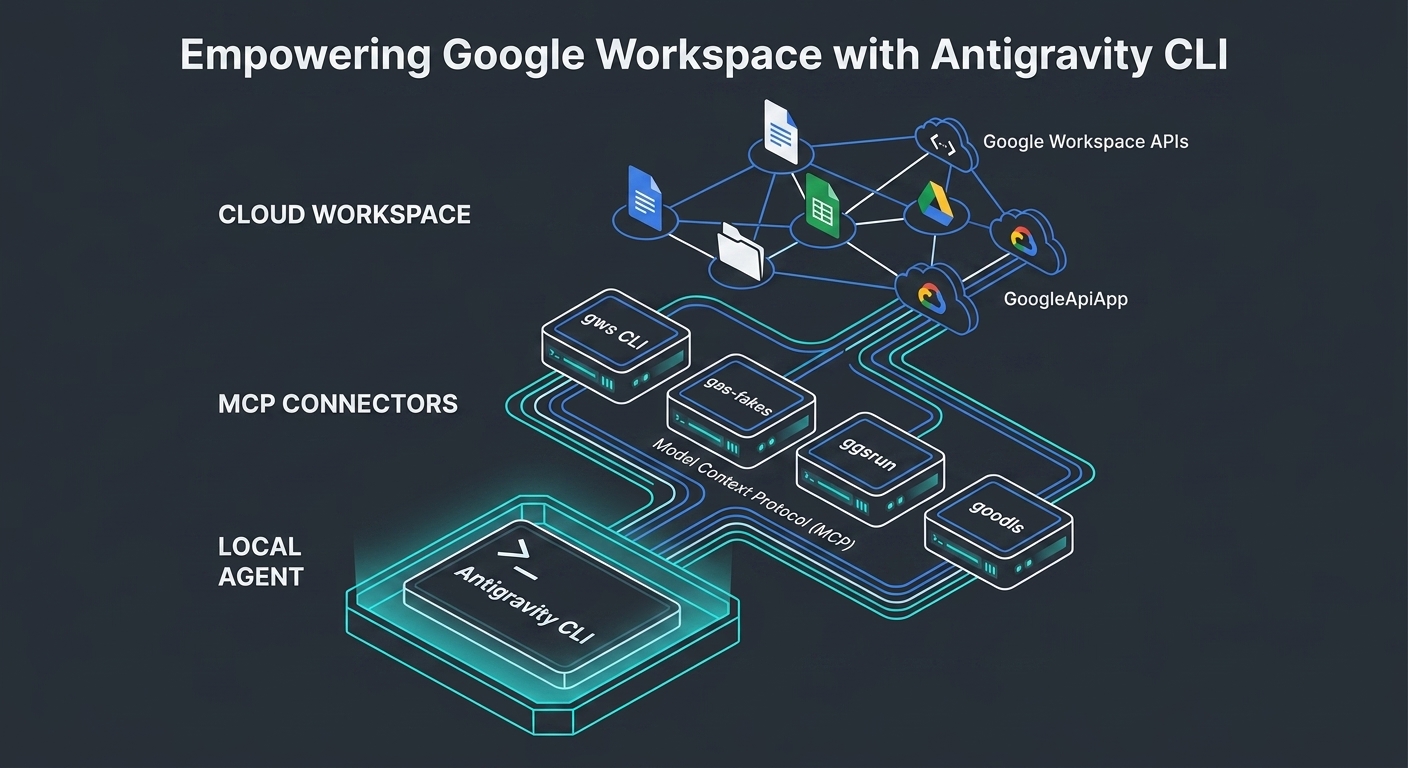
This article explores the integration of Google Workspace with the Antigravity CLI, the high-performance successor to the legacy Gemini CLI. This integration is critical because it bridges the gap between low-latency, local agent execution and cloud-native enterprise productivity platforms. We demonstrate this framework by evaluating five core developer tools—the Google Workspace CLI, gas-fakes, ggsrun, GASADK/GoogleApiApp, and goodls—and mapping their capabilities into distinct local, hybrid, and cloud execution layers. Our analysis reveals how this unified architecture streamlines complex, multi-step agentic workflows while optimizing resource consumption, establishing a blueprint for next-generation workspace automation.
Gists
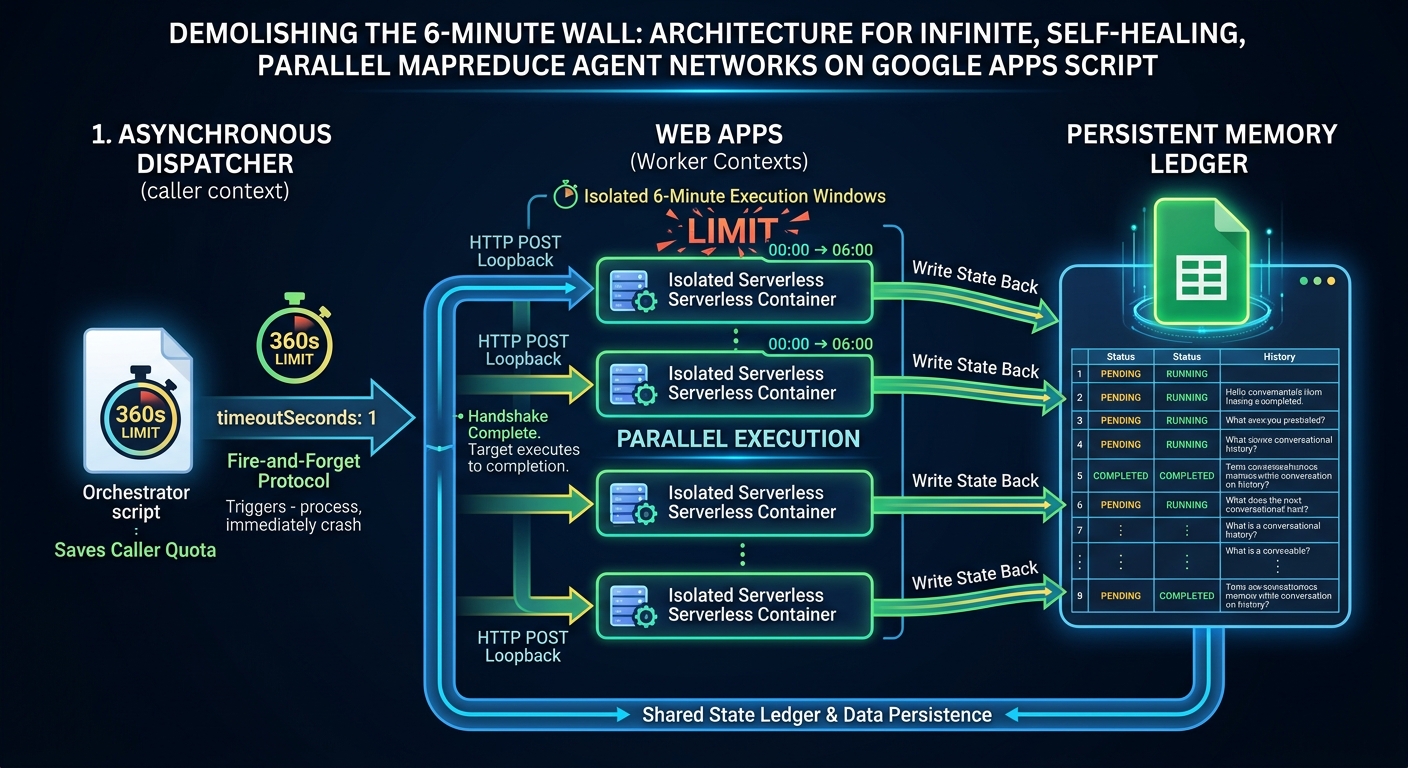
Abstract
This paper presents a serverless architecture that overcomes the stateless nature and 6-minute execution limit of Google Apps Script (GAS). By configuring a 1-second immediate timeout in UrlFetchApp loopback calls, an orchestrator dispatches background tasks and terminates immediately. This design frees up the caller’s execution quota while the target Web App runs to completion in an isolated container. Combined with a transactional Google Sheets state machine, this design supports self-perpetuating parallel MapReduce runs and multi-turn, state-hydrated generative AI agent networks without external compute infrastructure.
Gists

Abstract
This paper presents a self-evolving framework, Recursive Knowledge Crystallization (RKC), designed to overcome the “Catastrophic Forgetting” inherent in autonomous AI agents. By persisting evolved technical insights into a universally readable SKILL.md file based on the Agent skills specification, this approach establishes long-term memory and cross-platform portability. The framework was empirically validated through the development of gas-fakes, a highly complex Node.js-to-Google Apps Script (GAS) emulation library. The results demonstrate that agents can autonomously internalize project-specific architectural patterns and environmental nuances. Consequently, the framework achieves Zero-Shot Knowledge Transfer across distinct toolchains (Google Antigravity and the Gemini CLI) while maintaining absolute 1:1 behavioral parity with the live GAS environment.
Gists

Abstract
In the development of autonomous agents using Large Language Models (LLMs), restrictions such as context window limits and session fragmentation pose significant barriers to the long-term accumulation of knowledge. This study proposes a “self-evolving framework” where an agent continuously records and refines its operational guidelines and technical knowledge—referred to as its SKILL—directly onto a local filesystem in a universally readable format (Markdown). By conducting experiments across two distinct environments featuring opaque constraints and complex legacy server rules using Google’s Antigravity and Gemini CLI, we demonstrate the efficacy of this framework. Our findings reveal that the agent effectively evolves its SKILL through iterative cycles of trial and error, ultimately saturating its learning. Furthermore, by transferring this evolved SKILL to a completely clean environment, we verify that the agent can successfully implement complete, flawless client applications in a single attempt (zero-shot generation). This methodology not only circumvents the limitations of short-term memory dependency but also pioneers a new paradigm for cross-environment knowledge portability and automated system analysis.
Gists
Published: January 3, 2026
Author: Kanshi Tanaike
Abstract
Analyzing StackOverflow data (2008–2026) reveals a massive activity decline post-ChatGPT. Using Google Apps Script as a case study, this report quantifies the migration from human support to AI. We explore how the platform is pivoting from a help desk to a critical verification layer for AI-generated code to prevent model collapse.
Introduction
On StackOverflow, millions of developers engage in daily knowledge exchange, creating a historical repository of technological evolution. A prime example of this ecosystem is the google-apps-script tag. Having participated in this community for years, I have observed its threads evolve in tandem with Google’s platform updates.
URL: https://stackoverflow.com/users/7108653/tanaike?tab=answers&sort=newest
This is the statistics of my activities from 2025-01-01 - 2025-12-31 on Stackoverflow.
Total view counts: 8,087

Description
I am thrilled to announce a significant update to the Taking Advantage of Web Apps with Google Apps Script repository! Now at Version 2.0.0, this comprehensive guide has been extensively revised and expanded to provide unparalleled insights and practical guidance for developers leveraging Google Apps Script Web Apps.
This major overhaul introduces a wealth of new and enhanced content, designed to empower you with a deeper understanding and more advanced capabilities.
Gists

Abstract
This report investigates how Gemini handles current time information, particularly when using the Gemini API. We found that while the Gemini web interface knows the current time, the Gemini API does not inherently. Therefore, applications must explicitly provide current time information in API calls for accurate time-sensitive responses.
Introduction
The rapidly advancing field of generative AI is enabling increasingly complex tasks, particularly through the use of open protocols like the Model Context Protocol (MCP) and Agent2Agent (A2A) Protocol. These protocols facilitate sophisticated operations that often require accurate and dynamic information, including time-sensitive data. For instance, applications that manage schedules or coordinate events critically depend on precise time information.
Gists

Abstract
The report details a novel Gemini API method to analyze big data beyond AI context window limits, which was validated with Stack Overflow data for insights into Google Apps Script’s potential.
Introduction
Generative AI models face significant limitations when processing massive datasets, primarily due to the constraints imposed by their fixed context windows. Current methods thus struggle to analyze the entirety of big data within a single API call, preventing comprehensive analysis. To address this challenge, I have developed and published a detailed report presenting a novel approach using the Gemini API for comprehensive big data analysis, designed to operate effectively beyond typical model context window limits. Ref
Gists

Abstract
Generative AI faces limits in processing massive datasets due to context windows. Current methods can’t analyze entire data lakes. This report presents a Gemini API approach for comprehensive big data analysis beyond typical model limits.
Introduction
The rapid advancement and widespread adoption of generative AI have been remarkable. High expectations are placed on these technologies, particularly regarding processing speed and the capacity to handle vast amounts of data. While AI processing speed continues to increase with technological progress, effectively managing and analyzing truly large datasets presents significant challenges. The current practical limits on the amount of data that can be processed or held within a model’s context window simultaneously, sometimes around a million tokens or less, depending on the model and task, restrict direct comprehensive analysis of massive data lakes.
Gists
Published: March 9, 2025
Kanshi Tanaike
Introduction
On Stack Overflow, numerous users post questions and answers daily across various tags. These discussions, spanning a wide range of topics, provide valuable information and are highly beneficial. One such tag is “google-apps-script,” where I occasionally participate in discussions. Observing these threads over time, it’s evident that they evolve alongside updates to Google Apps Script, the technology at the core of the tag. This report aims to analyze this evolution as a trend within the “google-apps-script” tag. This trend encompasses changes in the number of questions, questioners, answerers, and associated tags. The evolution of the “google-apps-script” tag is closely linked to the development of Google Apps Script and its diverse applications.
URL: https://stackoverflow.com/users/7108653/tanaike?tab=answers&sort=newest
This is the statistics of my activities from 2024-01-01 - 2024-12-31 on Stackoverflow.
Total view counts: 186,104
Gists

Abstract
Google Apps Script automates tasks (even offline) and builds web apps using spreadsheets as databases. This report presents a basic dining reservation system to illustrate key aspects of web app development with Apps Script, HTML, and Javascript.
Introduction
Google Apps Script is one of the powerful automation tools for achieving the automation process. When Google Apps Script can be used for the situation, even when users are away from their computers, automation can continue thanks to cloud computing. Also, Google Apps Script can manage Google Spreadsheet with Google Spreadsheet service and quickly deploy Web Apps with HTML and Javascript with minimal coding. Ref1 Ref2 When Google Spreadsheet is used as a database and the Web Apps are used as the user interface, various web applications can be created. In this report, in order to help understand the key aspects of building web applications with Google Apps Script, I would like to introduce a simple web application. Here, as a sample, the dining reservation system created by Google Apps Script, HTML, and Javascript is implemented as a web application.
Gists
Abstract
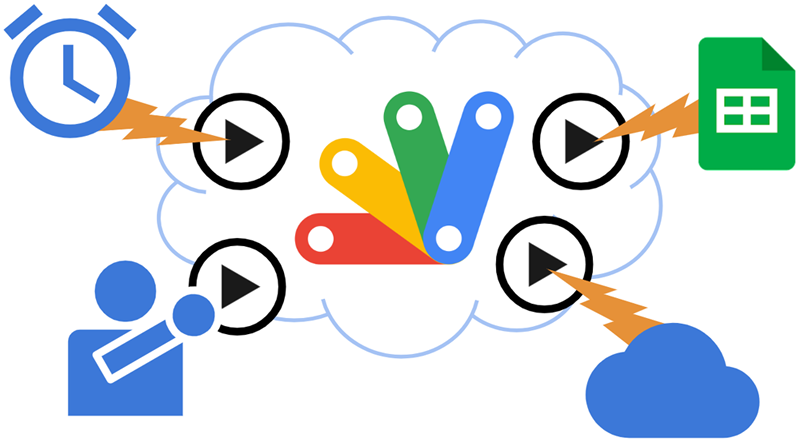
Google Apps Script is one of the strong tools with cloud computing, and it is very useful for various situations. Google Apps Script can be run by various methods. This report introduces how to execute Google Apps Script.
Recently, generative AI has given a lot of new users a chance to use Google Apps Script. If this report helps the users develop applications using Google Apps Script, I’m glad.
Gists
Published: January 6, 2024
Kanshi Tanaike
Introduction
At Stackoverflow, a lot of people post questions and answers to the questions every day. There are various tags in Stackoverflow. A lot of discussions are performed at each tag. Their discussions bring important information and are very useful for a lot of people. As one of the tags, there is “google-apps-script”. I sometimes discuss the questions with that tag. When we see the discussions, we notice that the discussions have changed and progressed over time, because “Google Apps Script” which is the origin of the tag is updated. This report thinks this change is the trend of the tag of “google-apps-script”. This trend includes the number of questions, questioners, answerers, and tags added to the tag of “google-apps-script”. The trend of the tag of “google-apps-script” is deeply related to the progression of Google Apps Script and the various applications for Google Apps Script.
Gists
Abstract
One day, you might have a situation where you are required to make users edit the protected cells using Google Apps Script. This report introduces a workaround for achieving this situation. The key factors for achieving this are as follows. 1. Run the script as the owner of Spreadsheet even when the script is run by a user. 2. In order to run the script as the owner, the installable triggers and the Web Apps are used.
Gists
Description
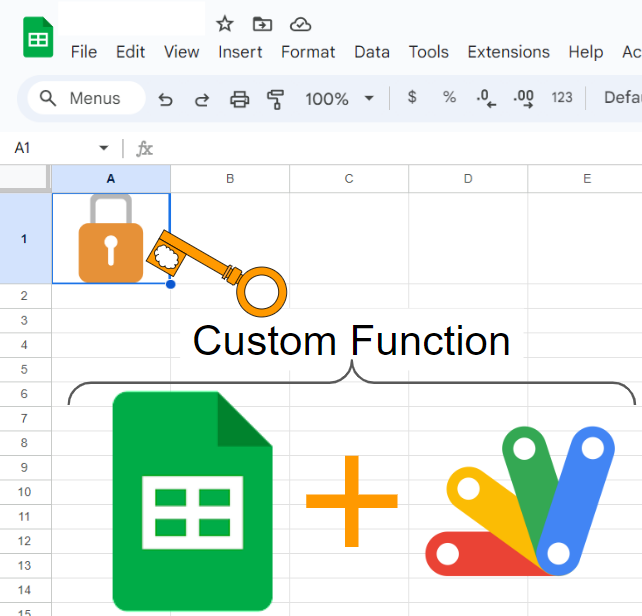
At Google Spreadsheet, custom functions created by Google Apps Script can be used. Ref When the custom function is used, the users can create a function for expanding the built-in functions for Spreadsheet. One day, you might have a situation for executing the custom function using an array. For example, under the situation that your custom function uses a single value instead of an array as the argument, when you want to use an array for each argument of the custom function, it is required to modify the original script of the custom function or the function calling the custom function. In this report, I would like to introduce a technique of array processing for the custom functions on Google Spreadsheets.
Gists
Description
At Google Spreadsheet, the cells can be merged as one cell. But, when the Spreadsheet including the merged cells is used with Google Apps Script, the script becomes a bit complicated. Also, I sometimes find some questions like this situation on Stackoverflow. In this report, I would like to introduce a technique for easily using the Spreadsheet including the merged cells with Google Apps Script.
Principle
Before it introduces the sample scripts, I would like to introduce the principle for using the Spreadsheet for the merged cells. You can understand the principle of this method from the following sample input and output images.
Gists
Abstract
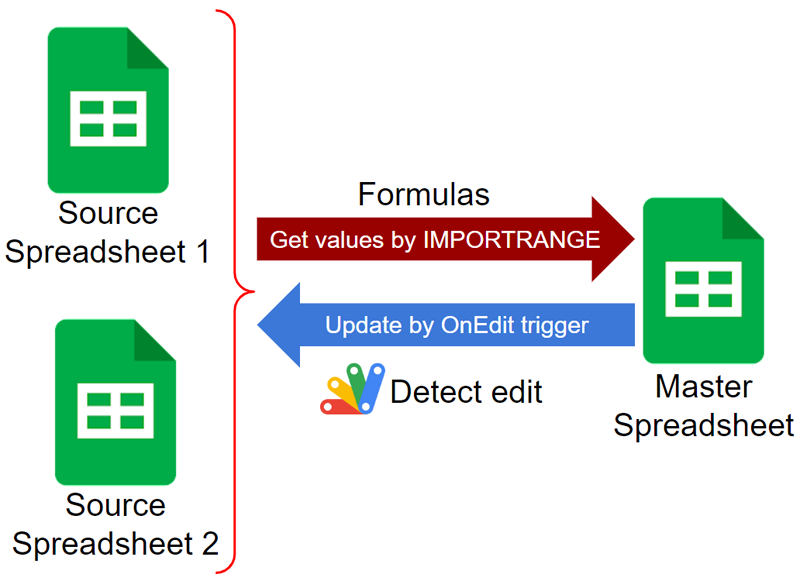
One day, you might have a situation where you are required to update a sheet using Google Apps Script when the cell values retrieved by IMPORTRANGE are changed. This report introduces a workaround for achieving this situation.
Introduction
Google Apps Script can be executed by several triggers. Ref When a cell in a Google Spreadsheet is manually edited, a function of Google Apps Script can be executed by detecting this edit. In most cases, the OnEdit trigger trigger of the simple trigger or the installable trigger is used. When the OnEdit trigger is used, a function can be executed by manually editing a cell. When the function is executed, the function can be run by giving the event object including the information about the edited cell.
Gists
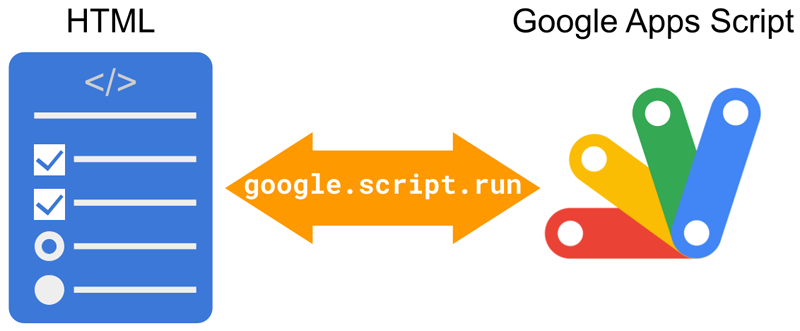
At the Google Apps Script project, the values can be transferred from HTML to Google Apps Script using google.script.run with Javascript. In this case, unfortunately, the values of all types cannot be transferred. In the official document, it says as follows. Ref
Most types are legal, but not Date, Function, or DOM element besides form; see description
Legal parameters are JavaScript primitives like a Number, Boolean, String, or null, as well as JavaScript objects and arrays that are composed of primitives, objects, and arrays. A form element within the page is also legal as a parameter, but it must be the function’s only parameter. Requests fail if you attempt to pass a Date, Function, DOM element besides a form, or other prohibited type, including prohibited types inside objects or arrays. Objects that create circular references will also fail, and undefined fields within arrays become null. Note that an object passed to the server becomes a copy of the original. If a server function receives an object and changes its properties, the properties on the client are not affected.
Gists
Abstract
Recently, I felt a change like never before in the questions on Stackoverflow. In order to confirm this, in this report, the trend of “google-apps-script” tag on Stackoverflow in the first half (January 1st to June 1st) of 2023 has been investigated. From this report, in 2023 when the affection of COVID-19 has been reduced socially, the appreciable trend was confirmed to the questions including a tag of “google-apps-script”. It is guessed that the origin of this appreciable trend is due to AI chatbots. The appearance of AI chatbots might give us a phase of major change to the method for understanding the statistical data obtained from online sites.
Gists
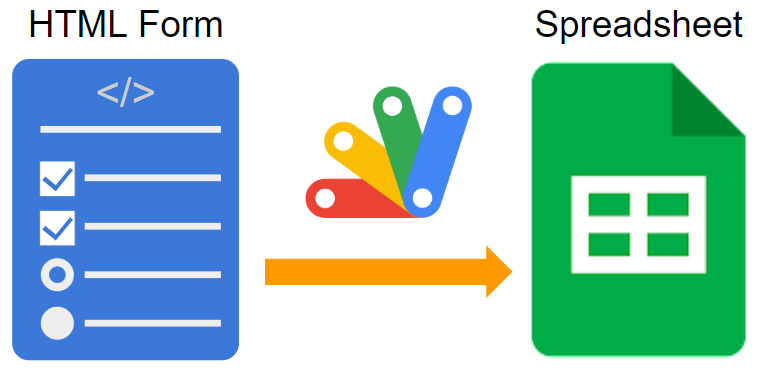
Abstract
This report introduces the method for easily implementing HTML forms with a Google Spreadsheet as a database using Google Apps Script. There are 2 patterns for the HTML form using Google Apps Script. One is that an HTML form is put into the same Google Apps Script project. Another is that an HTML form is put to a different server from a Google Apps Script project. In this report, the methods for easily implementing both patterns are introduced using the sample scripts.
Gists

Abstract
In this report, the detailed specification of PropertiesService has been investigated. It is considered that knowing this specification will be useful for developing applications with Google Apps Script. As a result, it was found that the maximum key and value sizes are 524,287 bytes with a 1-byte key and 8,066 bytes, respectively. And also, it was found that the maximum size of PropertiesService is required to be considered with both the key and value sizes.
Gists
Abstract
It has already been known that Google Apps Script is a strong tool for managing Google Spreadsheets. When the values are retrieved and/or put for Google Spreadsheet, there is a case that the discontinuous cells are required to be used. This report suggests the Best Practices for processing the discontinuous cells on Google Spreadsheet. From the results of process costs, it could understand the usefulness of using the discontinuous cells with low cost using Sheets API and Class RangeList of Spreadsheet service with Google Apps Script.
Gists
When a value is searched from the 1-dimensional array and a 2-dimensional array, after V8 runtime could be used, I use JSON object, Set object, and Map Object. But, I had never measured the process cost of this situation. In this post, I would like to introduce the process cost for searching a value using a JSON object, Set object, and Map object converted from the 1-dimensional array and 2-dimensional array.
Gists
Published: January 3, 2023
Kanshi Tanaike
Introduction
At Stackoverflow, a lot of people post questions and answers to the questions every day. There are various tags in Stackoverflow. A lot of discussions are performed at each tag. Their discussions bring important information and are much useful for a lot of people. As one of the tags, there is “google-apps-script”. I sometimes discuss the questions with that tag. When we see the discussions, we can notice that the discussions are changed and progressed over time, because “Google Apps Script” which is the origin of the tag is updated. This report thinks this change is the trend of the tag of “google-apps-script”. This trend includes the number of questions, questioners, answerers, and tags added to the tag of “google-apps-script”. The trend of the tag of “google-apps-script” is deeply related to the progression of Google Apps Script and the various applications for Google Apps Script.
Gists

Abstract
In Google Apps Script, there is the Web Apps. When Web Apps is used, the users can execute Google Apps Script using HTML and Javascript. This can be applied to various applications. When the Web Apps is deployed with “Anyone”, anyone can access the Web Apps. And, there is the case that Web Apps deployed with “Anyone” is required to be used. Under this condition, when 2 Factor Authentication (2FA) can be implemented, it is considered that the security can be higher and it leads to giving various directions for the applications using Web Apps. In this report, I would like to introduce the method for implementing the pseud 2FA for Web Apps deployed with “Anyone” using Google Apps Script.
Gists
Kanshi Tanaike
Introduction
There is a maximum executing time for Google Apps Script (GAS). That is 6 minutes. And, in the case of the custom function and the simple trigger, it is 30 seconds. Ref So users always have to pay attention to reducing the process cost of the scripts. Especially, it is very important to know the process costs for the array processing, because array processing is often used for spreadsheets and Google APIs. I have already reported about the array processing at “Benchmark: Loop for Array Processing using Google Apps Script with V8” and “Search for Array Processing using Google Apps Script”. In this report, the process cost checking a value in a one-dimensional array using Google Apps Script has been investigated.
Gists
This is a report related to the rule of item IDs for questions of Google Forms.
When the questions are created using the method of batchUpdate with Google Forms API, the created questions have the item IDs when the item IDs are not given in the request body. ( https://developers.google.com/forms/api/reference/rest/v1/forms#item ) For example, when you want to create a question and update the created question in one API call, it is required to include the custom item ID in the request body. But, it seems that in the current stage, the information of the item ID has never been published. So, in this report, I would like to consider the rule of item IDs of questions for Google Forms API.
Gists
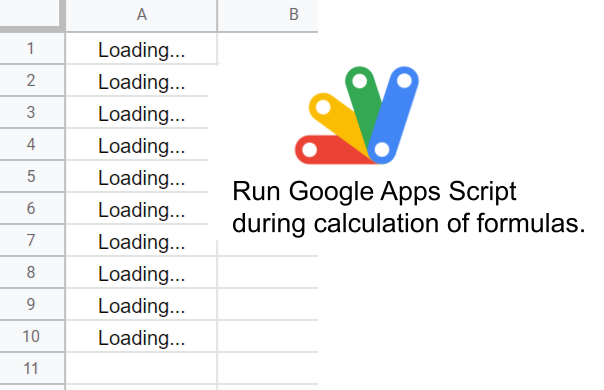
Today, I found a question ( https://stackoverflow.com/q/73540735 ) in Stackoverflow by Max Makhrov. When I saw this question, I thought that this is a good raising question. In this question, it has reported that when the Spreadsheet includes the formulas of the large calculation, when a Google Apps Script is run during the calculation of the formulas is running, the processing time of the script becomes long.
Gists
This is a sample script for efficiently creating Web Apps using a Google Apps Script library.
When a Google Apps Script library is used for creating Web Apps, the following advantage can be obtained.
- The script of the client-side can be simpler. Because most scripts for constructing Web Apps are included in the Google Apps Script library.
- When the script of Web Apps (In this case, the script of Google Apps Script library is modified.) is modified, the latest script is reflected in the Web Apps, immediately. Because when the Google Apps Script library is used as the latest version when the script of the library is modified, the client can use the latest script of the library, immediately. So, the downtime of Web Apps can be reduced.
- By this, it is not required to manually reflect the latest version of the script to the Web Apps.
- When you can change the script of Web Apps by changing the deployed version of the library.
The sample script for explaining this is as follows.
Gists
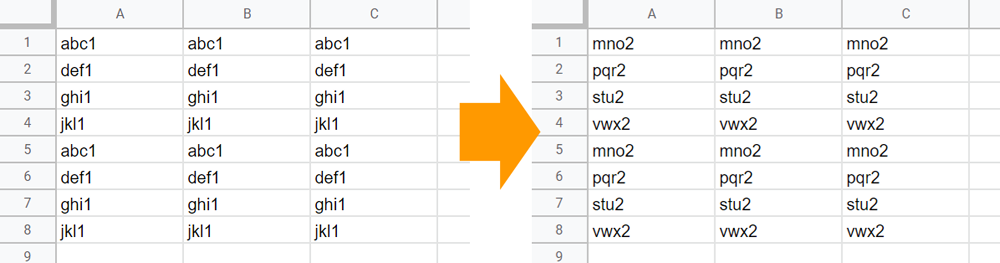
This is a sample script for high-efficiency finding and replacing many values in Google Spreadsheet with the low process cost using Google Apps Script.
When the various values are replaced in Google Spreadsheet using Google Apps Script, I’m worried about the process cost. So, in this report, I would like to introduce a sample script for high-efficiency achieving this.
Gists
Updated on January 25, 2024
Overview:
This is a report for challenging exporting the selected cells on Spreadsheet as an image using Google Apps Script and Javascript.
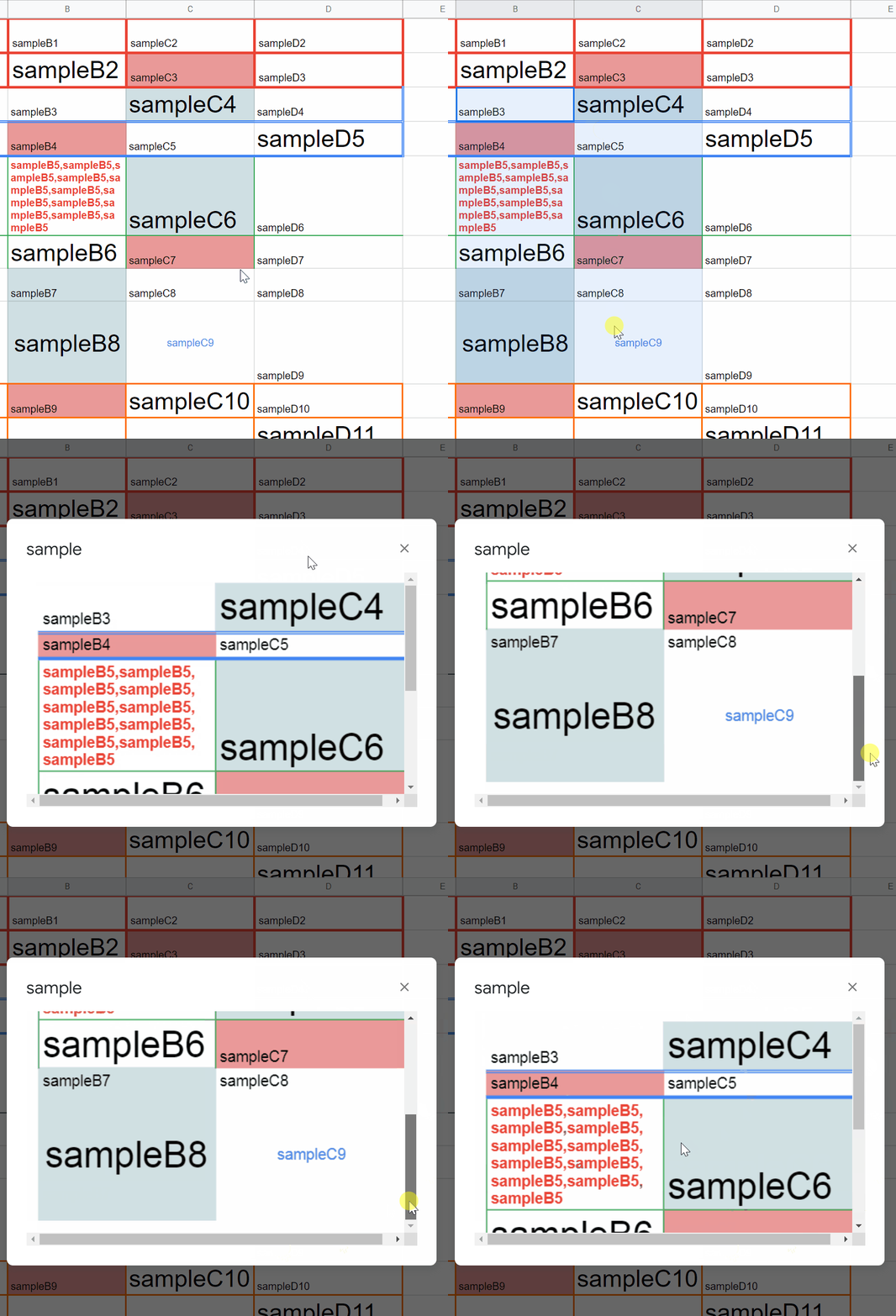
Description:
This report is based on this question by Max Makhrov. When I saw this question, I remembered that there are many questions for asking this in Stackoverflow. And, I thought that when this is achieved, it will be useful for the owner of this question and a lot of users. So, I have discussed this in his question.
Gists
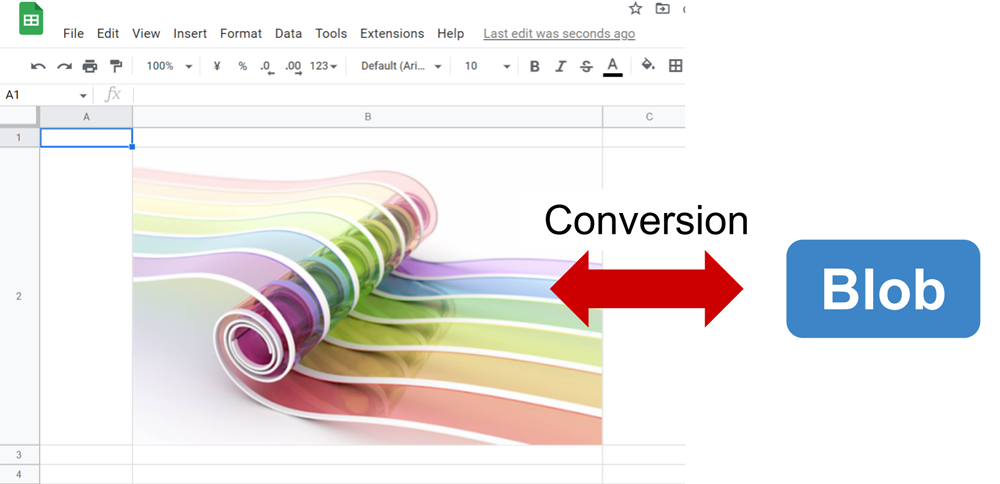
This is a report for management of images on Google Spreadsheet using Google Apps Script.
At October 30, 2018, Cass OverGridImage and the method of inserImage have been added to Spreadsheet Service. Ref At January 19, 2022, Class CellImageBuilder and Class CellImage have been added to Spreadsheet Service. Ref By these Classes and methods, the images got to be able to be managed on Google Spreadsheet. But, when the image is used to the various situations, there are the cases that it is required to ingenuity to manage the images. So, in this report, I would like to introduce the management of images on Google Spreadsheet using the sample scripts of Google Apps Script.
Gists
This is a report for the documentation comments for the functions of Google Apps Script.
When the documentation comments for functions of Google Apps Script are considered, you will think JsDoc. At Google Apps Script, a part of JsDoc can be used. But, in this report, I would like to introduce the documentation comments including JsDoc.
Sample situations
Sample 1
For example, when the following sample function is written,
Gists
Introduction
In order to retrieve the values from XML data, when XML data is parsed using Google Apps Script, there are several methods for parsing the data. Class XmlService, which is a built-in Class for managing XML data, might be the first way to come up with it. At Stackoverflow, it is posted questions that XML data is often parsed using Class XmlService. It is considered that Class XmlService is suitable for managing XML data.
Gists
Introduction
When we use HTML in the Google Apps Script project, in order to show the values from the Google Apps Script side, the HTML template is used. When I used the HTML template with a large value, I understood that the process cost can be reduced by devising a script. In this report, I would like to introduce the process cost of the HTML template using the benchmark.
Gists
This is a sample method for publishing various Google Docs files with the same URL using Google Apps Script.
By updating on May 25, 2022, the content got to be able to be embedded as a full page in the new Google site. Ref In this method, this is used.
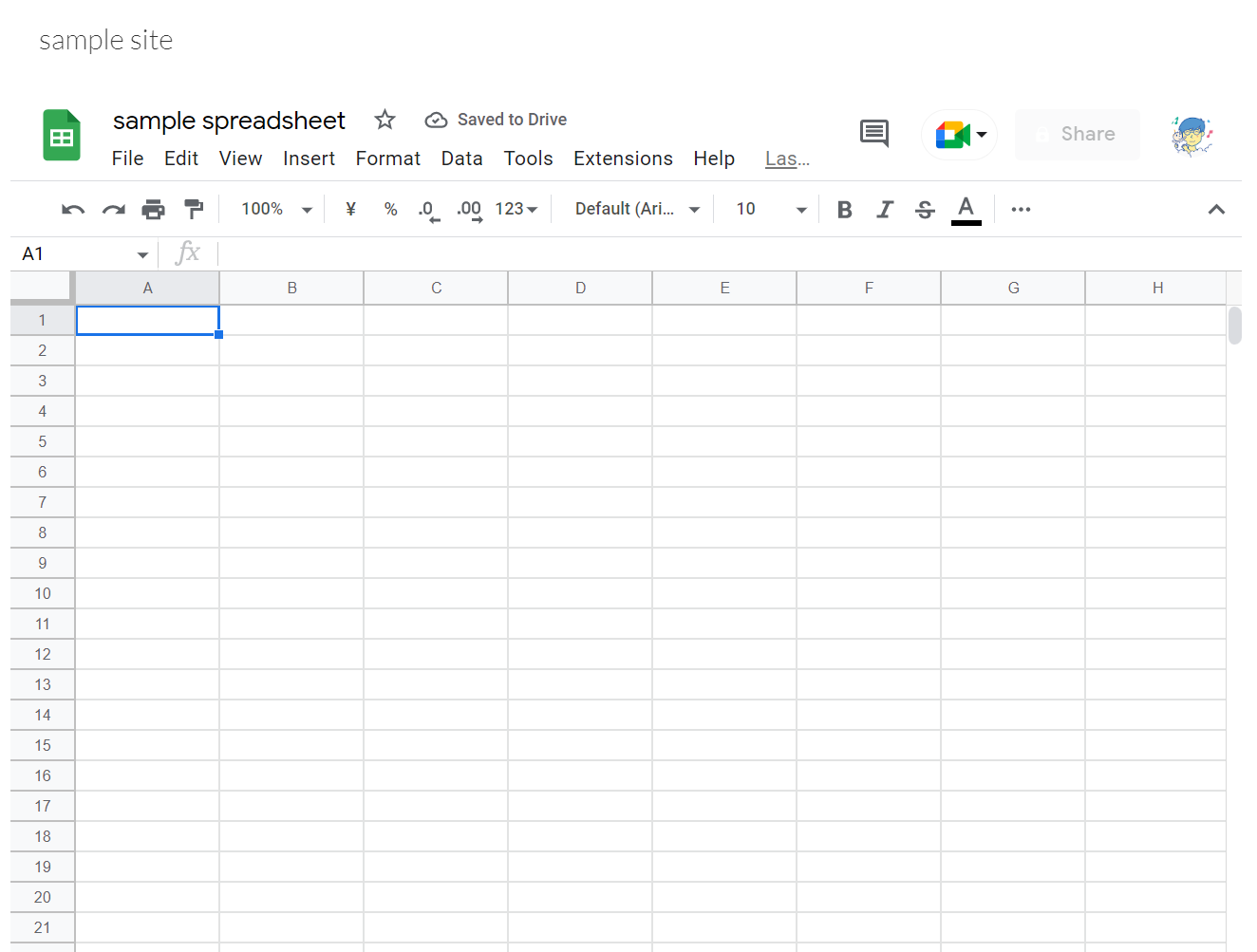
Usage
1. Create a Google Docs.
First, as a simple sample, please create a new Google Spreadsheet. And please copy the URL like https://docs.google.com/spreadsheets/d/{spreadsheetId}/edit.
Gists
Introduction
On March 14, 2022, it reported about “Google Sheets doubles cell limit”. Ref By this update, now, the users can use 10,000,000 cells in a Google Spreadsheet. This is great news for us. When I tried to handle 10,000,000 cells in a Google Spreadsheet using Google Apps Script, it was found that there were various important points. In this report, I would like to introduce the important points for handling 10,000,000 cells in Google Spreadsheet using Google Apps Script.
Gists
Introduction
In this report, I would like to introduce to apply the spread syntax and the destructuring assignment to Google Spreadsheet with Google Apps Script. The destructuring assignment can be used without V8 runtime. But, the spread syntax is required to be used with V8 runtime. Recently, I often saw the script using them at Stackoverflow. And also, I have sometimes gotten the questions related to the spread syntax and the destructuring assignment. So, I thought that I would like to introduce in my blog.
Gists
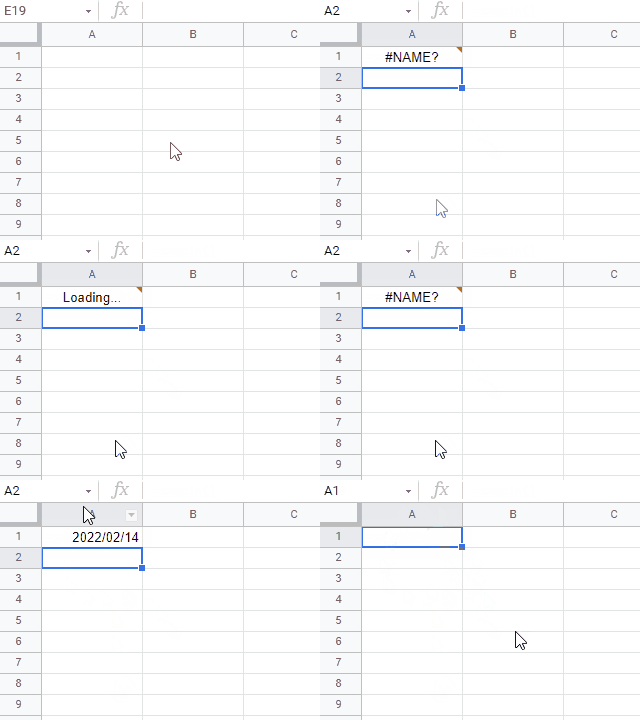
Here, I would like to introduce a report for occurring and resolving the infinite loop on Google Spreadsheet using Google Apps Script. I have reported this to Google issue tracker. Ref
Sample script: Occurring infinite loop
This sample script is a test script for confirming the infinite loop. Please be careful this. Please copy and paste the following script to the script editor of Google Spreadsheet and save it. And, please install OnChange trigger to the function onChange().
Gists
This is a report for inserting the multiple paragraphs to Google Document in order using Google Docs API.
When the multiple paragraphs are inserted to Google Document using Google Docs API, it is required to pay attention to the index for inserting the texts. In this report, I would like to introduce the points for achieving this with a simple method.
Although this report uses Google Apps Script, the logic of this method can be used for other language.
Gists
Published: January 7, 2022
Kanshi Tanaike
Introduction
At Stackoverflow, a lot of people post the questions and answers to the questions every day. There are various tags in Stackoverflow. A lot of discussions are performed at each tag. Their discussions bring important information and are much useful for a lot of people. As one of the tags, there is “google-apps-script”. I sometimes discuss the questions with that tag. When we see the discussions, we can notice that the discussions are changed and progressed by the time, because “Google Apps Script” which is the origin of the tag is updated. This report thinks this change is the trend of the tag of “google-apps-script”. This trend includes the number of questions, questioners, answerers, and tags adding to the tag of “google-apps-script”. The trend of the tag of “google-apps-script” is deeply related to the progression of Google Apps Script and the various applications for Google Apps Script.
Gists
This is a report about images put with “=IMAGE(IMAGE_URL)” function on Google Spreadsheet.
Experiment
When “=IMAGE(IMAGE_URL)” is put to a cell “A1” on Spreadsheet, the image is shown in the cell as shown in the following image.
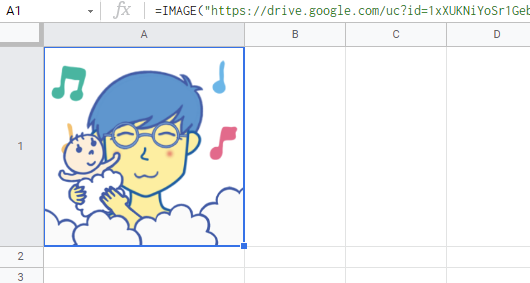
For this situation, when the following script is run,
const sheet = SpreadsheetApp.getActiveSpreadsheet().getSheetByName("Sheet1");
const range = sheet.getRange("A1");
range.copyTo(range, { contentsOnly: true });
The following result is obtained. In this case, the formula is removed and an image can be seen as shown in the following image.
Gists
In this report, it has investigated the large decimal numbers and the exponential notation for Google Spreadsheet. When the large decimal numbers are put to the Spreadsheet, the Spreadsheet automatically sets the display value using the exponential notation. In this report, the result when the values are retrieved by Spreadsheet service and Sheets API is shown.
Sample script
At first, please create new Spreadsheet and open the script editor. And please copy and paste the following script. And, please enable Sheets API at Advanced Google services.
Gists
-
Published: September 15, 2021
-
Updated: September 17, 2021
- From the discussions, added data by changing the wait time of LockService for Web Apps.
Kanshi Tanaike
Introduction
When the users try to write to a Spreadsheet using a form, the developers have to consider the concurrent submission from the form. For example, when multiple users submit the data with the form simultaneously, all data are possibly not to be saved to the Spreadsheet. So it is considered that it is important to know the information about the concurrent writing to Google Spreadsheet using a form. In this report, such a situation was investigated.
Gists
Introduction
Here, I would like to report the process costs for retrieving the 1st empty cell or 1st non empty cell of the specific column of Google Spreadsheet using Google Apps Script (GAS). For this situations, the following 2 patterns can be considered.
-
Retrieving 1st empty cell of specific column by searching from TOP of sheet
-
Retrieving 1st NON empty cell of specific column by searching from BOTTOM of sheet
Gists
Published: January 16, 2021
Kanshi Tanaike
Introduction
At Stackoverflow, a lot of people post the questions and answers to the questions every day. There are various tags in Stackoverflow. A lot of discussions are performed at each tag. Their discussions bring the important information and are much useful for a lot of people. As one of tags, there is “google-apps-script”. I sometimes discuss at the questions with that tag. When we see the discussions, we can notice that the discussions are changed and progressed by the time, because “Google Apps Script” which is the origin of the tag is updated. This report thinks this change as the trend of tag of “google-apps-script”. This trend includes the number of questions, questioners, answerers and tags adding to the tag of “google-apps-script”. The trend of tag of “google-apps-script” is deeply related to the progression of Google Apps Script and the various applications for Google Apps Script.
Gists
Description
When Google Spreadsheet is used, there is the case that the built-in functions and the custom functions in the cells are used. For the functions of Google Apps Script, there is the method for measuring the process cost. Ref But for the built-in functions, it is required to create the script for it. In this report, the script for measuring a function put in a cell has been proposed, and the process cost of the built-in functions has been measured. The proposed script can measure the process cost for the built-in functions and custom functions on Google Spreadsheet. The script is created with using Google Apps Script. When the process cost can be known for the built-in functions and custom functions, it is considered that it will be useful for the developers using Google Spreadsheet.
Gists
Introduction
Here, I would like to report the process costs for retrieving the values from the arrays for Spreadsheet using Google Apps Script (GAS). When Spreadsheet is used with Google Apps Script, we have the following situations.
-
Retrieve values from the multiple rows in a column.
-
Retrieve values from the multiple columns in a row.
When the values are retrieved from above situations, it is required to retrieve the values from 1 dimensional array in the 2 dimensional array. In this report, the process costs for retrieving the values from the 2 dimensional array of above situations have been measured.
Gists
Introduction
At Stackoverflow, a lot of people post the questions and answer to the questions every day. By this, there are a lot of important information in Stackoverflow. I have already reported “Trend of google-apps-script Tag on Stackoverflow” using the data retrieved from Stackoverflow. Ref. 1 It is found that the important statistical result can be obtained by analyzing the data on Stackoverflow. In this report, I would like to introduce the statistical analysis of duplicated questions for the google-apps-script tag in Stackoverflow. When the duplicated question is analyzed, it is considered that the important issues for users can be known. As the result, it was found that there are the trend that the duplicated questions related to Javascript, Google Spreadsheet , the process cost and the cooperation with HTML and Javascript are posted.
Gists
Introduction
Here, I would like to report the process costs for searching values in Spreadsheet using Google Apps Script (GAS). When the values are searched in Google Spreadsheet, the following 3 patterns can be considered. Ref
- Retrieve all values using
getValues, and the values are searched from the retrieved array.
- Use TextFinder.
- Use Query language.
In these cases, it has already been found that the lowest process cost is to use the Query language. And about finding values from an array, I have already been reported as “Benchmark: Search for Array Processing using Google Apps Script”. But I had never summarized the process costs for TextFinder and find values from an array. So in this report, I would like to introduce this. As the result, the importance of TextFinder for retrieving the row numbers and the row values by searching a value could be understand.
Gists
This table shows all tags using together with the tag of “google-apps-script” at Stackoverflow. The tags are summarized every year. At 2020, the data is retrieved from January 1, 2020 to July 16, 2020. The number enclosed (###) means the number of use of the tag. When this table was a material for discussing about the current tags for “google-apps-script”, I’m glad.
| Year |
Used Tag list |
| 2008 |
|
| 2009 |
google-form(1),google-sheets(1),google-apps-script(1) |
| 2010 |
google-apps-script(50),google-sheets(31),javascript(23),google-apps(4),custom-function(2),google-calendar-api(2),spreadsheet(2),google-docs-api(2),vba(2),google-docs(2),amazon(1),amazon-web-services(1),api(1),timezone(1),ms-office(1),xml-namespaces(1),xml(1),closures(1),google-sites(1),google-maps-api-3(1),array-formulas(1),google-sheets-formula(1),google-data-api(1),date-manipulation(1),datetime(1) |
| 2011 |
google-apps-script(72),google-sheets(31),google-apps(16),javascript(15),google-docs(8),google-spreadsheet-api(4),google-form(3),google-api(3),google-docs-api(2),spreadsheet(2),google-fusion-tables(2),google-calendar-api(2),java(2),google-app-engine(2),number-formatting(1),file-upload(1),google-apps-marketplace(1),json(1),email(1),html(1),tabpanel(1),gmail(1),performance(1),user-interface(1),zend-framework(1) |
| 2012 |
google-apps-script(1877),google-sheets(345),javascript(161),google-docs(63),google-sites(61),google-apps(54),google-spreadsheet-api(44),google-drive-api(44),gmail(40),google-calendar-api(31),google-docs-api(29),html(19),google-visualization(18),triggers(18),email(15),google-form(15),spreadsheet(14),urlfetch(13),gwt(13),oauth(13),custom-function(13),google-app-engine(12),user-interface(11),jquery(11),jdbc(10) |
| 2013 |
google-apps-script(2606),google-sheets(765),javascript(413),google-drive-api(124),google-docs(120),google-form(97),google-spreadsheet-api(78),google-apps(77),gmail(58),google-sites(57),html(56),google-calendar-api(41),google-api(34),email(31),google-docs-api(26),jquery(24),arrays(23),triggers(22),forms(22),google-app-engine(21),google-visualization(21),user-interface(20),spreadsheet(20),json(19),google-caja(19) |
| 2014 |
google-apps-script(2758),google-sheets(875),javascript(606),google-form(177),google-drive-api(168),google-docs(143),google-spreadsheet-api(90),google-apps(84),html(81),google-calendar-api(61),google-sites(56),gmail(54),email(53),jquery(49),arrays(45),forms(39),spreadsheet(35),triggers(35),excel(33),json(33),google-docs-api(28),google-api(28),google-app-engine(24),google-visualization(22),google-bigquery(22) |
| 2015 |
google-apps-script(2781),google-sheets(1134),javascript(714),google-form(159),html(158),google-docs(127),google-apps(115),google-spreadsheet-api(98),google-drive-api(97),gmail(66),arrays(57),google-calendar-api(57),jquery(51),google-api(46),forms(40),spreadsheet(39),email(38),google-docs-api(36),json(35),triggers(33),google-sites(32),regex(32),google-visualization(30),php(23),css(20) |
| 2016 |
google-apps-script(2888),google-sheets(1198),javascript(783),google-form(156),html(118),google-drive-api(117),google-apps(117),google-docs(77),arrays(74),google-spreadsheet-api(73),json(60),gmail(59),email(46),google-calendar-api(43),google-sheets-api(42),google-api(42),triggers(38),google-visualization(31),jquery(31),spreadsheet(31),google-docs-api(29),date(24),regex(23),forms(22),csv(22) |
| 2017 |
google-apps-script(3873),google-sheets(1537),javascript(979),google-form(194),html(158),google-sheets-api(137),google-docs(127),google-apps(122),google-drive-api(122),google-spreadsheet-api(114),arrays(110),gmail(85),email(64),json(56),gmail-api(52),google-api(52),triggers(51),jquery(51),spreadsheet(48),google-calendar-api(42),regex(34),google-sites(31),forms(27),custom-function(27),excel(27) |
| 2018 |
google-apps-script(4716),google-sheets(2062),javascript(1046),google-form(189),google-drive-api(189),google-docs(167),google-sheets-api(165),gmail-addons(155),html(134),triggers(129),gmail(120),arrays(111),google-calendar-api(79),json(68),google-app-maker(63),email(59),google-apps-script-addon(55),gmail-api(54),google-api(50),regex(50),custom-function(48),gsuite(47),google-bigquery(45),google-slides-api(43),web-applications(43) |
| 2019 |
google-apps-script(6731),google-sheets(3300),javascript(1352),google-form(263),html(250),google-sheets-api(223),google-drive-api(216),google-sheets-formula(168),google-docs(158),gmail(154),web-applications(143),arrays(141),google-sheets-macros(134),triggers(128),google-apps-script-web-application(112),google-calendar-api(88),gmail-addons(85),google-apps-script-addon(85),json(82),google-apps(77),gsuite(76),google-api(69),google-app-maker(64),scripting(61),google-apps-script-editor(61) |
| 2020 |
google-apps-script(4853),google-sheets(2503),javascript(1221),html(199),google-form(176),google-drive-api(161),google-apps-script-web-application(160),arrays(154),google-sheets-api(149),google-docs(124),google-sheets-formula(120),google-sheets-macros(90),gmail(86),json(85),google-apps-script-simple-triggers(69),google-calendar-api(68),urlfetch(66),google-apps-script-addon(65),spreadsheet(57),triggers(51),gsuite-addons(48),gs-installable-triggers(47),email(47),gsuite(47),google-apps-script-editor(45) |
Gists
This is the statistics for the tag gas on Stackoverflow. This statistics are retrieve from Stackoverflow using Stackexchange API. About 2020, the data is retrieved from 2020-01-01 to 2020-07-01.
This statistics data was obtained at 2020-07-15.
Measurement result
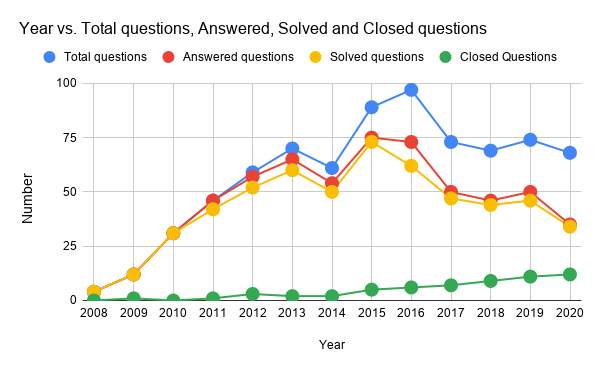
Fig. 1: Year vs. Total questions, Answered, Solved and Closed questions
Table 1: Tags which were used together with gas tag for each year.
| Year |
Used Tag list |
| 2008 |
|
| 2009 |
gas(12),assembly(11),x86(4),gcc(3),nasm(2),linux(2),relative-addressing(1),disassembly(1),avr(1),macos(1),segments(1),inline-assembly(1),tdm-mingw(1),c(1),directive(1),mips(1),compiler-construction(1),gnu(1),stack(1),multithreading(1) |
| 2010 |
gas(31),assembly(28),x86(9),ld(6),gcc(4),linux(4),arm(4),gnu(3),c(3),inline-assembly(2),linker(2),elf(1),gdb(1),macos(1),ubuntu(1),mips(1),binutils(1),iphone(1),x86-64(1),64-bit(1),macros(1),intel-syntax(1),compiler-construction(1),python(1),embedded(1) |
| 2011 |
gas(46),assembly(37),x86(16),gcc(11),c(9),linux(6),gnu(4),64-bit(3),arm(3),nasm(3),att(3),inline-assembly(3),binutils(2),x86-64(2),register-allocation(2),system-calls(1),32-bit(1),cortex-a8(1),fibonacci(1),recursion(1),xcode(1),string(1),mips(1),dwarf(1),callstack(1) |
| 2012 |
gas(59),assembly(46),gcc(15),x86(10),x86-64(6),macos(6),gnu(6),linux(6),att(5),c(5),arm(4),ld(4),system-calls(3),binutils(3),nasm(3),struct(2),elf(2),syntax(2),interrupt(2),fpu(2),inline-assembly(1),clang(1),webrtc(1),compilation(1),iphone(1) |
| 2013 |
gas(70),assembly(55),x86(18),x86-64(16),gcc(14),linux(14),att(7),nasm(6),c++(5),inline-assembly(4),c(4),syntax(3),intel-syntax(2),printf(2),arm(2),intel(2),segmentation-fault(2),arrays(2),linker(2),i386(2),ffmpeg(1),ios(1),yasm(1),tasm(1),elf(1) |
| 2014 |
gas(61),assembly(53),x86(17),c(9),gcc(8),x86-64(7),nasm(5),linux(5),gdb(4),arm(4),stack(3),masm(3),disassembly(3),att(3),inline-assembly(3),arrays(2),32-bit(2),cpu-registers(2),shellcode(1),sockets(1),intel-syntax(1),opcode(1),gnu(1),c++(1),scanf(1) |
| 2015 |
gas(89),assembly(76),x86(25),att(15),c(13),gcc(12),x86-64(12),gnu(6),nasm(4),linux(4),gdb(3),inline-assembly(3),mips(3),macos(2),clang(2),elf(2),disassembly(2),macros(2),yasm(2),xcode(2),calling-convention(2),makefile(2),ld(2),arm64(2),intel-syntax(1) |
| 2016 |
gas(97),assembly(86),x86(32),x86-64(17),gcc(16),linux(16),att(14),c(5),nasm(5),osdev(4),ld(4),x86-16(4),linker(4),c++(3),gnu(3),gdb(2),forth(2),riscv(2),dwarf(2),intel(2),memory-alignment(2),intel-syntax(2),macos(2),system-calls(2),real-mode(2) |
| 2017 |
gas(73),assembly(64),x86(26),gcc(22),att(15),c(11),x86-64(11),intel-syntax(4),gnu(4),linux(4),arm(4),bootloader(4),64-bit(4),nasm(3),x86-16(3),ubuntu(2),osdev(2),inline-assembly(2),gdb(2),macos(2),ld(2),string(2),go(1),if-statement(1),objdump(1) |
| 2018 |
gas(69),assembly(55),x86(24),x86-64(14),gcc(13),att(6),linux(6),arm(4),macos(3),intel-syntax(3),position-independent-code(3),forth(2),ubuntu(2),x86-16(2),gdb(2),scanf(2),inline-assembly(2),gnu(2),blockchain(2),nasm(2),ld(2),osdev(2),bootloader(2),cygwin(1),debugging(1) |
| 2019 |
gas(74),assembly(58),x86(21),x86-64(15),gcc(10),att(10),c(8),linux(8),gnu(5),gdb(5),ld(4),macros(3),intel-syntax(3),inline-assembly(2),shared-libraries(2),macos(2),dwarf(2),elf(2),arm(2),addressing-mode(2),machine-code(2),bootloader(2),c-preprocessor(1),pdp-11(1),thumb(1) |
| 2020 |
gas(68),assembly(55),x86(25),gcc(17),x86-64(16),att(13),intel-syntax(7),c(4),bootloader(4),x86-16(4),osdev(3),arm(3),linux(3),c++(3),gnu(3),linker(3),arm64(2),string-literals(2),powerpc(2),riscv(2),calling-convention(2),ld(2),macos(2),clang(1),abi(1) |
Summary
From Fig. 1, it shows that the tag gas is used a lot at 2016. At that time, this tag is used for 97 questions. After 2016, this frequency of gas is a bit low. The average frequency of use is 71.
Gists
This is the statistics for the tag appscript on Stackoverflow. This statistics are retrieve from Stackoverflow using Stackexchange API. About 2020, the data is retrieved from 2020-01-01 to 2020-07-01.
Recently, this tag is modified by editing the tags. So I think that it has to be said that this statistics data is obtained at 2020-07-06.
Measurement result
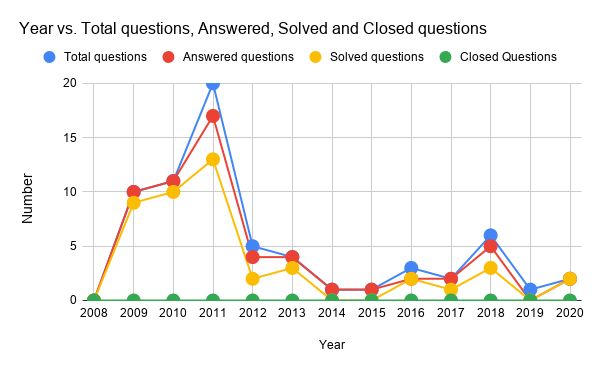
Fig. 1: Year vs. Total questions, Answered, Solved and Closed questions
New section CORS in Web Apps was added to Taking advantage of Web Apps with Google Apps Script
In this section, I would like to introduce CORS in Web Apps. As the result, in order to prevent the error related to CORS, it was found the following important points.
-
It is required to return ContentService.createTextOutput() and ContentService.createTextOutput("done") from doGet and doPost.
-
For POST method, the data is required to be converted to the string and sent to Web Apps.
Gists
In this report, I would like to report for processing to create new file to the specific folder using Drive API. When the new file is created to the specific folder using Drive API, the property of parents with the value of folder ID is included in the request body of the method “Files: create”. About this process, I had thought that the file is directly created to the specific folder. But, I could confirm that the new file is created by the following process.
Gists
Abstract
I have already reported about “Change Tab Detection on Google Spreadsheet using onSelectionChange Event Trigger with Google Apps Script”. Ref It is considered that when the situation which uses the event trigger of onSelectionChange is thought, the response speed is important. So, here, I investigated the characteristics of response for the event trigger of onSelectionChange.
Demo
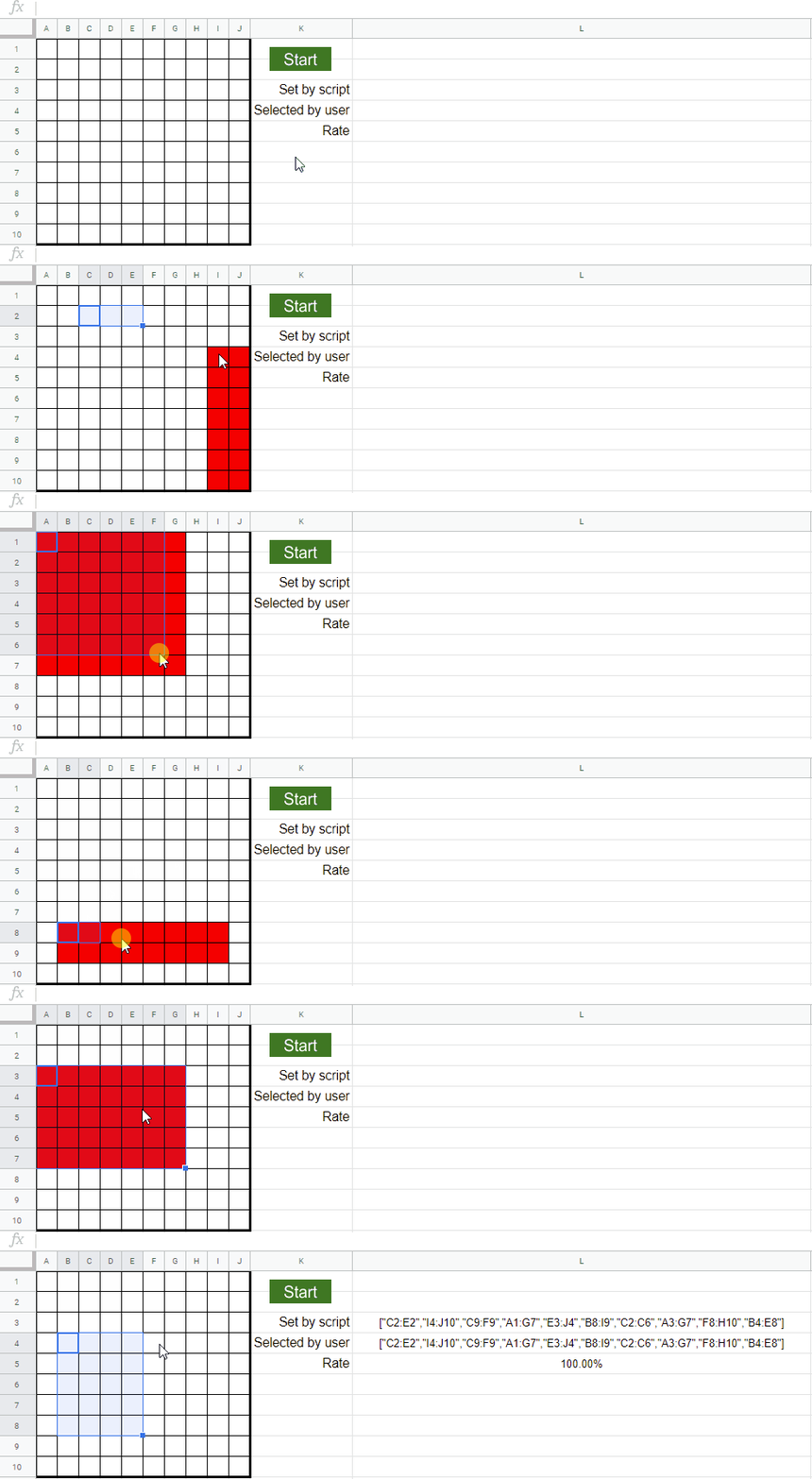
Experiment
Sample script
In order to investigate the response speed, I used the following sample script. The work of sample script can be seen at above demonstration movie. In this report, the script is important for discussing the result. So I pot this at this section instead of the appendix.
Gists
Kanshi Tanaike
Introduction
V8 engine got to be able to be used at Google Apps Script. By this, I have reported about the process costs with and without using V8. Ref It is considered that knowing the process costs for various methods will be useful for creating the applications with Google Apps Script. Here, I would like to introduce the process costs of each situations under V8. The situations which measured the cost are as follows.
Gists
- February 9, 2020
- Published.
- March 15, 2020
- Results of "for of" and "for of with iterator" were added.
Kanshi Tanaike
Introduction
Please be careful! This result can be only used for Google Apps Script.
There are a limit executing time for Google Apps Script (GAS). That is 6 minutes.1 So users always have to pay attention to reducing the process cost of the scripts. Especially, it is very important to know the process cost for the array processing, because the array processing is often used for spreadsheet and Google APIs. I have already reported “Benchmark: Loop for Array Processing using Google Apps Script”.2 At February 7, 2020, the V8 runtime got to be able to be used in my account. By this, it is considered that it is possibly changed the result of benchmark without V8 2. So I measured about this. In this report, the process cost of “loop” for the array processing using GAS has been investigated with V8 runtime.
Gists
Published: January 10, 2020
Kanshi Tanaike
Introduction
At Stackoverflow, a lot of people post the questions and answers to the questions every day. There are various tags in Stackoverflow. A lot of discussions are performed at each tag. Their discussions bring the important information and are much useful for a lot of people. As one of tags, there is “google-apps-script”. I sometimes discuss at the questions with that tag. When we see the discussions, we can notice that the discussions are changed and progressed by the time, because “Google Apps Script” which is the origin of the tag is updated. This report thinks this change as the trend of tag of “google-apps-script”. This trend includes the number of questions, questioners, answerers and tags adding to the tag of “google-apps-script”. The trend of tag of “google-apps-script” is deeply related to the progression of Google Apps Script and the various applications for Google Apps Script.
Gists
August 28, 2019
Published.
Kanshi Tanaike
Introduction
Please be careful! This result can be only used for Google Apps Script.
There are a limit executing time for Google Apps Script (GAS). That is 6 minutes for Consumer and Google Apps free edition, and 30 minutes for G Suite and Early Access. 1 So many users always have to pay attention to reducing the process cost of scripts. So it is very important to know the process cost of various situations. I have already reported the costs for various processes as the reports. 2 In this report, the process cost for importing CSV data to Spreadsheet using GAS has been investigated.
Gists
March 25, 2019
Published.
Kanshi Tanaike
Introduction
At Stackoverflow, a lot of people post the questions and answers to the questions every day. There are various tags in Stackoverflow. A lot of discussions are performed at each tag. Their discussions bring the important information and are much useful for a lot of people. As one of tags, there is “google-apps-script”. I sometimes discuss at the questions with that tag. When we see the discussions, we can notice that the discussions are changed and progressed by the time, because “Google Apps Script” which is the origin of the tag is updated. This report thinks this change as the trend of tag of “google-apps-script”. This trend includes the number of questions, questioners, answerers and tags adding to the tag of “google-apps-script”. The trend of tag of “google-apps-script” is deeply related to the progression of Google Apps Script and the various applications for Google Apps Script.
“Taking advantage of Web Apps with Google Apps Script” was updated. A section of “How to use dev mode from outside” was added.
- When you deploy Web Apps, you can see the link labeled latest code. The link is like
https://script.google.com/macros/s/###/dev. When you access to the link of latest code using your browser under you login to Google, you can access to Web Apps with the dev mode. But if you want to access to Web Apps with the dev mode from outside, there are no documents for the method. Here, it introduces such method.
You can check this at https://github.com/tanaikech/taking-advantage-of-Web-Apps-with-google-apps-script.
Gists
Benchmark: Reading and Writing Spreadsheet using Google Apps Script
October 12, 2018
Published.
October 18, 2018
Updated.
In order to compare with Advanced Google Service, a result of Sheets API by UrlFetchApp was added to Appendix.
Kanshi Tanaike
Introduction
Please be careful! This result can be only used for Google Apps Script.
There are a limit executing time for Google Apps Script (GAS). That is 6 minutes for Consumer and Google Apps free edition, and 30 minutes for G Suite and Early Access. 1 So many users always have to pay attention to reducing the process cost of scripts. So it is very important to know the process cost of various situations. I have already reported the costs for various processes as the reports. 2 In this report, the process cost for reading and writing values for Spreadsheet using GAS has been investigated.
Recently, I was invited to Skillshare.com. They said that “will you teach about Google Apps Script?”. I thought that if I can be helpful for other users, I’m glad. So I joined to there and created a presentation. I would like to create more classed in the future. If those were helpful for you, I’m glad.
Gists
September 21, 2018
Published.
Kanshi Tanaike
Overview
This is a report about the possibility of asynchronous process using event triggers. This is for Google Apps Script (GAS).
Description
onEdit() which is a simple trigger is often used as a trigger when the values are modified on Spreadsheet. When users want to use the script including some methods which are required to be authorized as the onEdit event, a installable trigger of onEdit is used. If the trigger is installed for the function of onEdit(), when the event trigger is run, onEdit() is run 2 times. In order to avoid this, the installable trigger is installed to the functions except for the functions of simple triggers. The functions of simple triggers which is the same events are not used in the project. When I thought about this situation, I thought that both onEdit() which is run by the simple trigger and the function which is run by the installable trigger might be able to be used, simultaneously. So I investigated about this situation.
Gists
Benchmark: Decreasing Loop for Array Processing using Google Apps Script
August 11, 2018
Published.
Kanshi Tanaike
Introduction
Please be careful! This result can be only used for Google Apps Script.
There are a limit executing time for Google Apps Script (GAS). That is 6 minutes. 1 So users always have to pay attention to reducing the process cost of the scripts. Especially, it is very important to know the process cost for the array processing, because the array processing is often used for spreadsheet and Google APIs. I have already reported the process costs for various processes as reports. 2-7 In this report, the process cost of “Decreasing loop” for the array processing using GAS has been investigated.
I updated the report of “Benchmark: Loop for Array Processing using Google Apps Script”. In this update, “reduce” was added. If this report is useful for your situation, I’m glad.
You can check this at https://gist.github.com/tanaikech/848aeafaac1ec676900bb78e3ce220b6.
Gists
Benchmark: Conditional Branch using Google Apps Script
July 11, 2018
Kanshi Tanaike
Introduction
Please be careful! This result can be only used for Google Apps Script.
There are a limit executing time for Google Apps Script (GAS). That is 6 minutes.1 So users always have to pay attention to reducing the process cost of the scripts. Especially, it is very important to know the process cost for the array processing, because the array processing is often used for spreadsheet and Google APIs. Recently, I have already published some reports about the process cost using GAS.2-6 From these reports, it has found that GAS shows much different process cost from other languages. So it is important to investigate the process cost for various scenes. In this report, the process cost of “conditional branch” using GAS has been investigated.
Gists
Benchmark: Search for Array Processing using Google Apps Script
July 2, 2018
Kanshi Tanaike
Introduction
Please be careful! This result can be only used for Google Apps Script.
There are a limit executing time for Google Apps Script (GAS). That is 6 minutes.1 So users always have to pay attention to reducing the process cost of the scripts. Especially, it is very important to know the process cost for the array processing, because the array processing is often used for spreadsheet and Google APIs. Recently, I have reported about the process cost of the loop for the array processing.2 Also I have reported “Improved Algorithms for Summation of Array Elements” as a method for reducing the process cost.3 From these reports, it has found that GAS shows much different process cost from other languages. So it is important to investigate the process cost for various scenes. In this report, the process cost of “searching strings in an array” for the array processing using GAS has been investigated.
Gists
Overview
This is a sample script for easily retrieving the reformatted scripts without comments in a project using Google Apps Script (GAS).
Description
When I create GAS script, if the format of script is not correct, the script editor lets me know about it. By this, I can find that the script editor and/or Google Drive checks the format of scripts. I had wished if I could use this function. Recently, I noticed an interesting function. A GAS project is created and when function myFunction() {Logger.log(this)} is run in the script, I noticed that all scripts in the project are included in this. Furthermore, when I saw the retrieved script, also I noticed that their scripts are reformatted and all comments are removed. In the case of Apps Script API, when the scripts are retrieved by the API, the retrieved script is the same to the original one. So I think that this will help users retrieve simply the reformatted GAS scripts, and such the reformatted scripts will be able to be used for the various situations.
Gists
Overview
This is a method for removing Third-party Apps with Account Access using a script.
Demo
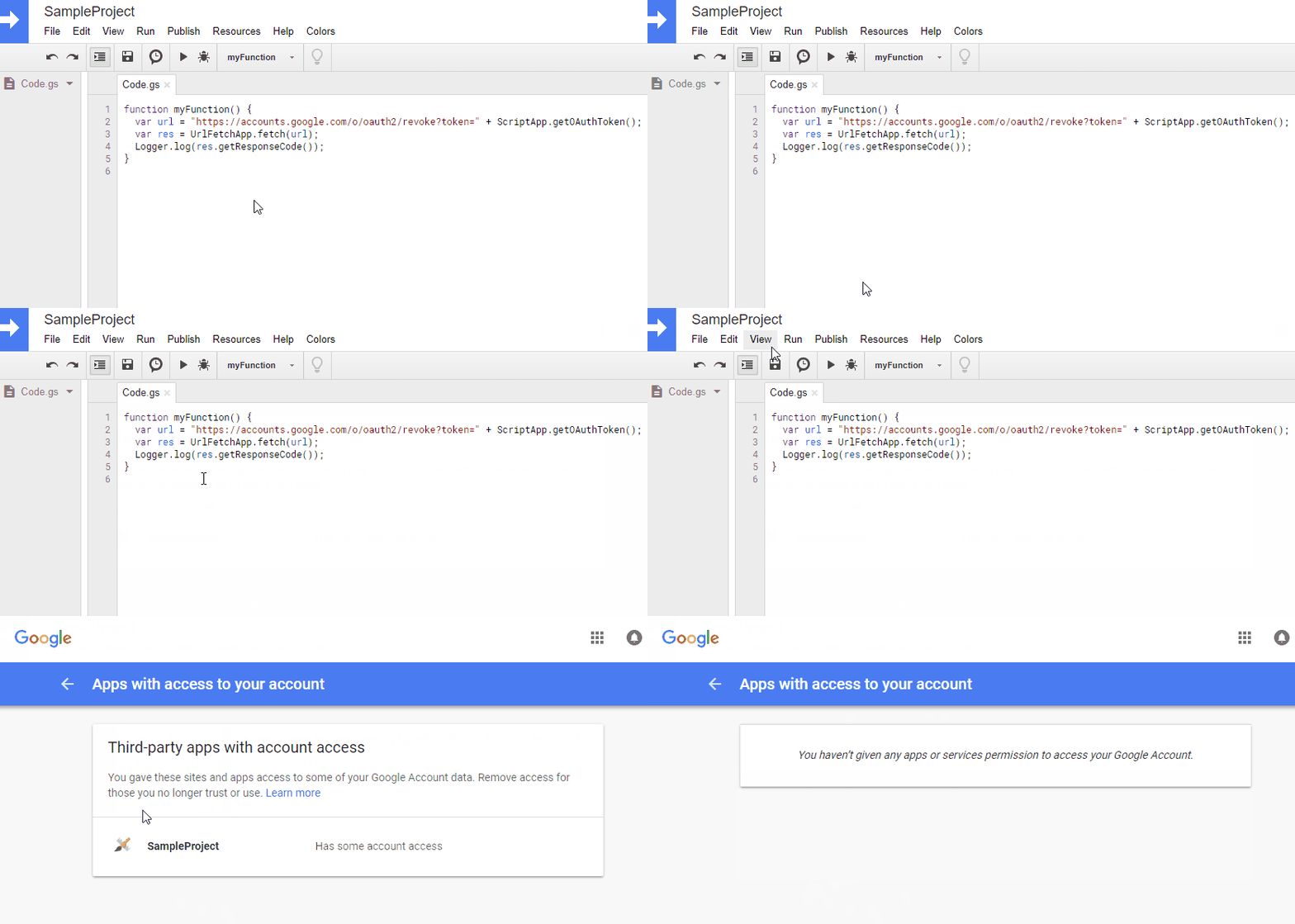
Description
When users create a script in a project and run the script, if the methods which are required to use scopes are included, users have to authorize to use the scopes using the browser. By authorizing it, users can use the script. The authorized projects can be seen at Third-party Apps with Account Access. One day, I had a situation that it required to remove the authorization of project, because of the security. Third-party Apps with Account Access can be manually removed as you know. But at that time, I wanted to remove using a script. So I came up with this method.
Overview
This is a report to take advantage of Web Apps with Google Apps Script (GAS).
Description
There is Web Apps as one of applications using Google Apps Script (GAS). I sometimes use this Web Apps. But I have only a little the information for the specification of Web Apps. So in order to take more advantage of Web Apps, I investigated and summarized about this. The aim of this report is to become one of the basic information for creating various applications using Web Apps with GAS.
Gists
By Google’s update at January 19, 2018, fetchAll method was added to the UrlFetch service. When I saw the usage, I couldn’t find the detail information about the actual running state. So I investigated about it.
As the result, it was found that the fetchAll method is worked by the asynchronous processing. The returned data is reordered by the order of requests. By this, it was also found that if you want to retrieve the data from the several URL, the process cost of UrlFetchApp.fetchAll() is much lower than that of UrlFetchApp.fetch() using for loop.
Gists
Benchmark: Loop for Array Processing using Google Apps Script
April 16, 2018
Published.
July 26, 2018
Updated.
Result of reduce was added.
Kanshi Tanaike
Introduction
Please be careful! This result can be only used for Google Apps Script.
There are a limit executing time for Google Apps Script (GAS). That is 6 minutes.1 So users always have to pay attention to reducing the process cost of the scripts. Especially, it is very important to know the process cost for the array processing, because the array processing is often used for spreadsheet and Google APIs. I have already reported “Improved Algorithms for Summation of Array Elements” as a method for reducing the process cost.2 In this report, the process cost of “loop” for the array processing using GAS has been investigated.
Gists
Introduction
There are event objects at Google Apps Script. Typically, users which use Spreadsheet often use onEdit(event). Here, I would like to introduce the process costs for the event objects using this onEdit(event).
When onEdit(event) is used for the spreadsheet, event of onEdit(event) has the following structure.
{
  "authMode": {},
  "range": {
    "columnStart": 1,
    "rowStart": 1,
    "rowEnd": 1,
    "columnEnd": 1
  },
  "source": {},
  "oldValue": "old sample text",
  "user": {
    "nickname": "sampleName",
    "email": "sample email"
  },
  "value": "sample text"
}
In this structure, for example, the range of active cell is "range": {"columnStart": 1, "rowStart": 1, "rowEnd": 1, "columnEnd": 1 }. Namely, it’s “A1”. Users can use the range of active cell using this event object. In this report, I have investigated the process cost for retrieving the range of active cell as a sample.
Description
There are a limit executing time for Google Apps Script (GAS). It’s 6 minutes. So users have to pay attention to the process cost of the script. GAS can use JavaScript 1.7. This means to be able to be used comprehension for GAS.
In this report, the process cost for the comprehension has been investigated. The normal for loop was used as the competitor. As a result, it was found that the comprehension can be used one of methods for reducing the process cost. For 1 dimensional array, the process cost of comprehension is about 60% lower than that of the normal one. For 2 dimensional array, the process cost of comprehension is about 50% lower than that of the normal one. Each data is the average for 10 times measurements.
This “souwapy” is a library for summing array elements with high speed by new algorithm (Pyramid method). The speed is faster than csv and panbdas module of python and v8 engine of node.js. The souwapy module is 2.3 and 3.1 times faster than csv and pandas module, respectively. This was really surprised me. It was found that the theory was correct.
At first, I have created this theory for Google Apps Script. But recently I had to use large data and output a csv file on python. So I made this library. Additionally, I had wanted to know how to public own library to PyPI before. This chance was good for me. If this library is helpful for other people, I’m glad.
Kanshi TANAIKE
Abstract
I have already reported that the pyramid method is one of very effectively algolithms for summing string elements in an array using Google Apps Script (GAS). This report describes the adaptability of the pyramid method to any languages except for GAS. c++ (g++), Go, Java, Javascript on Node.js, Python and Ruby were chosen as the sample languages. In those languages, there are languages which have the distinctive commands for summing the array elements. In this report, “+” operator as a standard command and a special command for each language were used. For c++ (g++), Javascript on Node.js and Python which have no distinctive commands for summing the array elements, only “+” operator was used. For others, both “+” operator and each special command such as “[]byte”, “StringBuilder” and “«” were used. For languages without the distinctive commands for summing, the pyramid method made us show some interesting phenomena. It was found that the pyramid method shows a good effect on only the specific language. It was found that “+” operator had been optimized for g++ and Node.js. “+” operator of Python was corresponding to theoretical results. This means that “+” operator of Python is not optimized. On the other hand, for languages with the distinctive commands for summing, it was found that the distinctive commands is incompatible to the pyramid method. These results made us show the possibility of visualization for the optimized codes.
Kanshi TANAIKE
Abstract
I considered an efficient algorithm for summation of array elements. All elements in an array are string. When those elements are summed using scripts, a standard method is to add each element in order. If the script is run without any optimize, the process becomes gradually sluggish, because the total amount of active data during the summation process is proportional to the square of the number of array elements. This leads directly to the high process-cost. Such phenomenon notably appears at Google Apps Script (GAS). This report says about the solution of this problem using a new algorithm of a pyramid method. The pyramid method achieves that the total amount of active data increases proportional to the linear of the number of array elements. By this, the processing time becomes much shorter than that of the process using the standard method. The pyramid method achieved the process-cost reduction of $99.7\%$ compared with the standard method at GAS. I realized again that new discoveries are hidden into the familiar scenes of every-day life.