Gists
Abstract
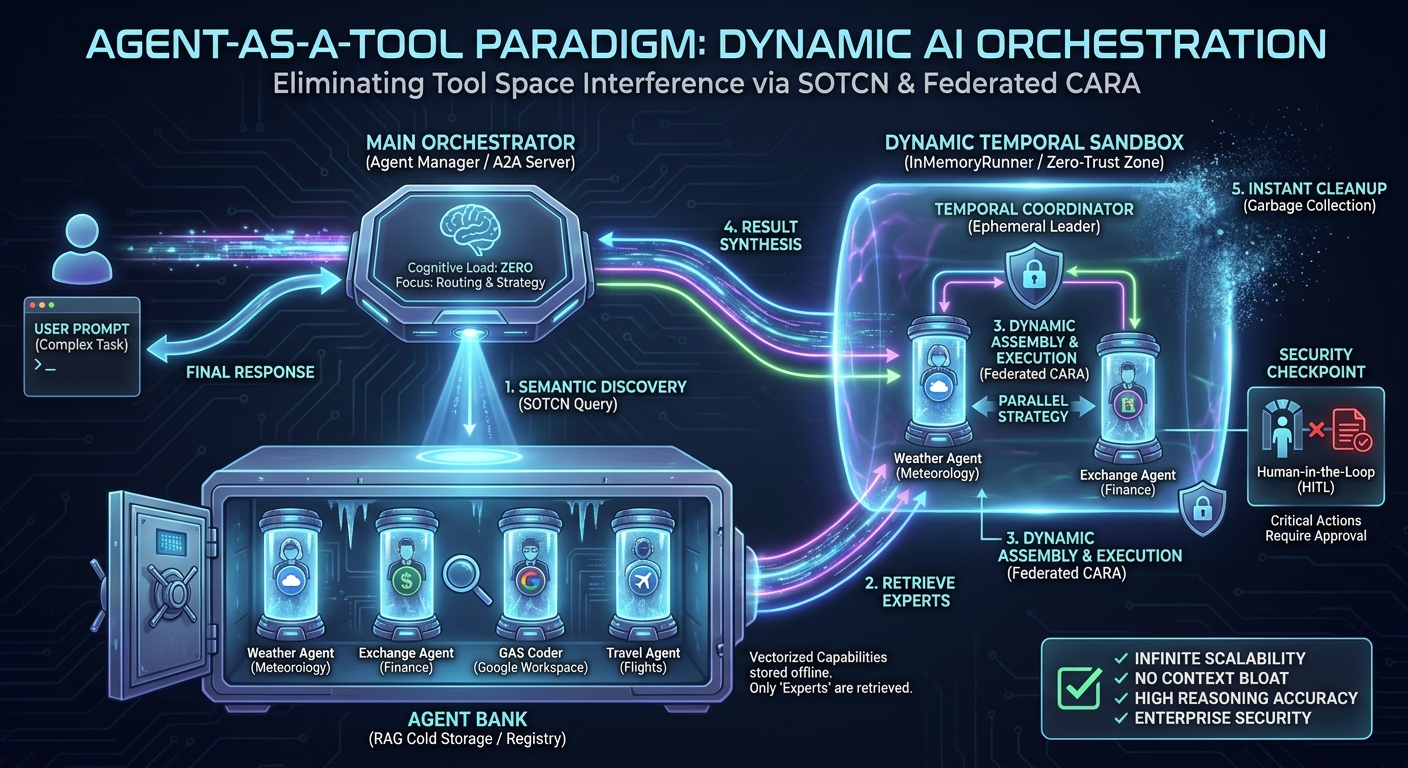
As Large Language Model (LLM) agents increasingly integrate numerous external systems, they suffer from Tool Space Interference (TSI), a phenomenon causing context bloat, attention dilution, and degraded reasoning accuracy. In this paper, we introduce the Agent-as-a-Tool paradigm—an evolutionary, practical implementation of the recently proposed Self-Optimizing Tool Caching Network (SOTCN) and Federated Context-Aware Routing Architecture (Federated CARA). By leveraging Retrieval-Augmented Generation (RAG) to dynamically discover and assemble stateful, autonomous sub-agents on the fly, this architecture completely eliminates TSI, enforces Zero-Trust execution boundaries, and achieves infinitely scalable AI orchestration.
Gists
Abstract
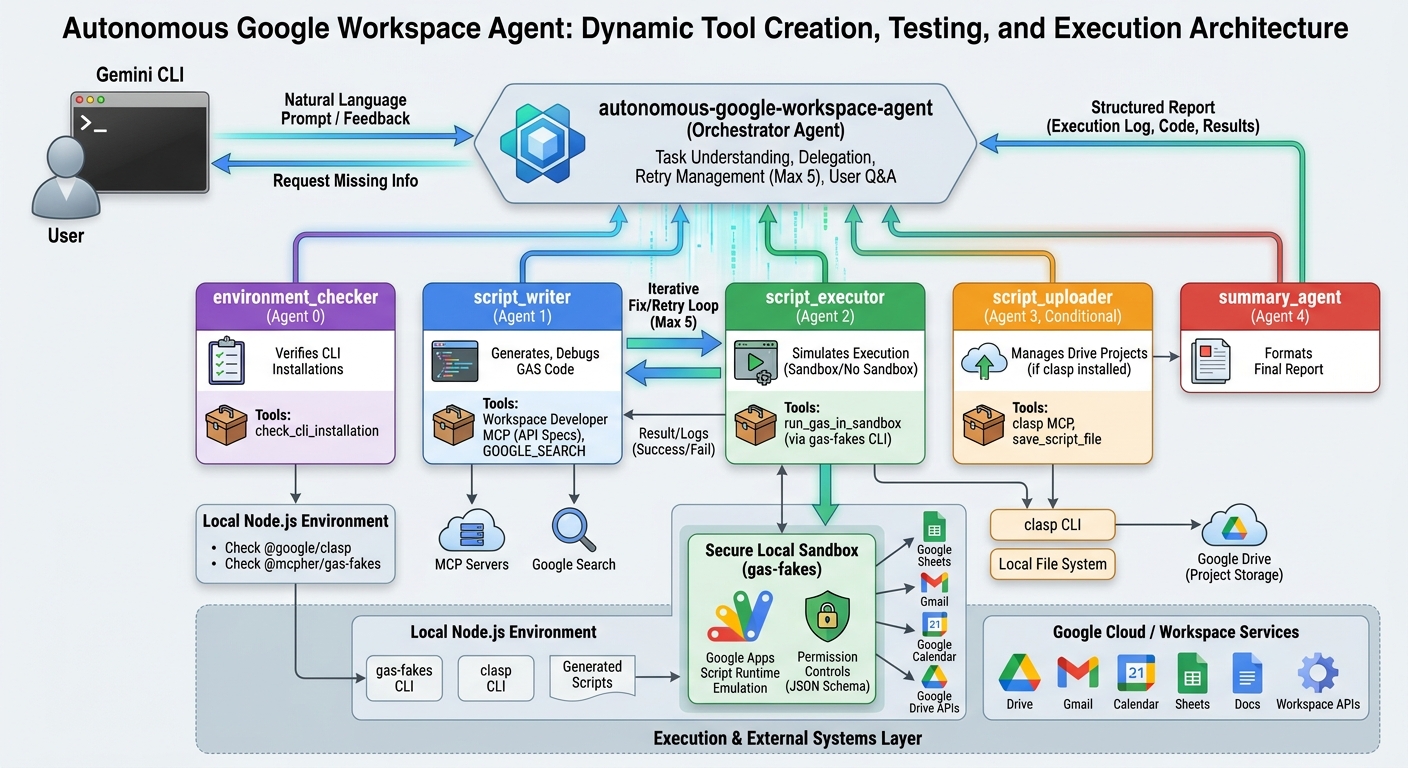
Welcome to the Agentic Enterprise era. This article explores a paradigm shift in generative AI workflows by introducing an autonomous agent capable of dynamically creating, testing, and executing original tools. Utilizing Google Apps Script, Node.js emulation, and multi-agent orchestration, this architecture overcomes traditional limitations, enabling highly adaptable task execution.
Introduction
At Google Cloud Next 2026, a clear mandate was delivered: the era of generative AI as a passive assistant is over. We have entered the age of the Agentic Enterprise, where AI has transitioned from a software tool you deploy into an autonomous coworker you onboard. This identity shift is staggering. With models processing over 16 billion tokens per minute via direct API use, we are witnessing an industrial-scale migration toward autonomous workflows. In this new ecosystem, Workspace Intelligence eliminates tab-hopping, allowing users to seamlessly query across Google Drive, Gmail, and third-party platforms. Data has transformed from a reactive archive into a “System of Action,” driven by Deep Research Agents that bridge structured and unstructured data to prevent hallucinations.
Gists
Abstract
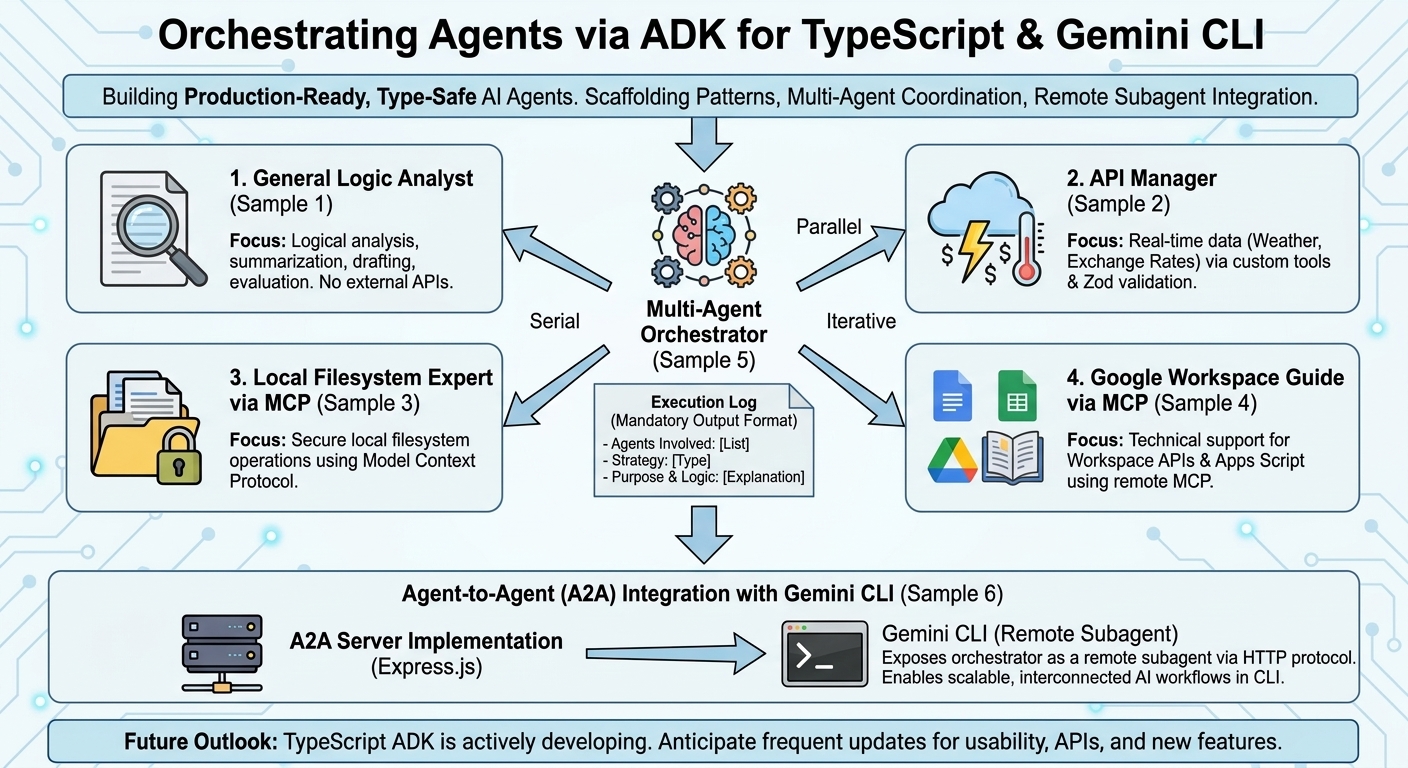
Explore how to build and orchestrate production-ready, type-safe AI agents using Google’s TypeScript Agent Development Kit (ADK). This guide provides practical scaffolding patterns, multi-agent coordination strategies, and seamless integration techniques for deploying remote subagents within the Gemini CLI ecosystem.
Introduction
As the artificial intelligence landscape rapidly evolves, modern generative AI increasingly relies on autonomous agents equipped with sophisticated components, including system instructions, specialized skills, and Model Context Protocol (MCP) servers. To facilitate the development of such AI-driven applications, Google has released the Agent Development Kit (ADK) across multiple programming languages Ref. Among these, the ADK for TypeScript Ref offers distinct advantages for modern engineering paradigms:
Gists

Abstract
This article explores integrating remote subagents built with Google Apps Script into the Gemini CLI using the Agent-to-Agent (A2A) protocol. It demonstrates how bypassing standard authentication via local agent cards enables seamless execution of complex workflows while effectively overcoming Tool Space Interference (TSI) for massive toolsets.
Introduction
Recently, remote subagent support was introduced to the Gemini CLI. Ref With this feature, the Gemini CLI connects to remote subagents using the Agent-to-Agent (A2A) protocol, expanding its capabilities by delegating tasks to external services. I have previously published several articles discussing the A2A server architecture:
Gists

Abstract
This article introduces a Google Apps Script-based Agent2Agent architecture to solve Tool Space Interference. While the provided demonstration utilizes a single server for testing purposes, the architecture is designed for distributed task execution. By running multiple category-specific A2A servers in parallel, users can achieve scalable, high-efficiency agent networks.
Introduction
As the Model Context Protocol (MCP) standardizes LLM connectivity, the Agent2Agent (A2A) paradigm is becoming essential for executing complex, multi-step tasks. However, integrating a high volume of tools often triggers “Tool Space Interference (TSI)"—a phenomenon where verbose metadata saturates context windows and degrades reasoning accuracy. Ref Ref Current industry guidelines suggest a “soft limit” of 20 functions per agent; exceeding this threshold frequently results in hallucinations and logic failures.
Gists
Abstract
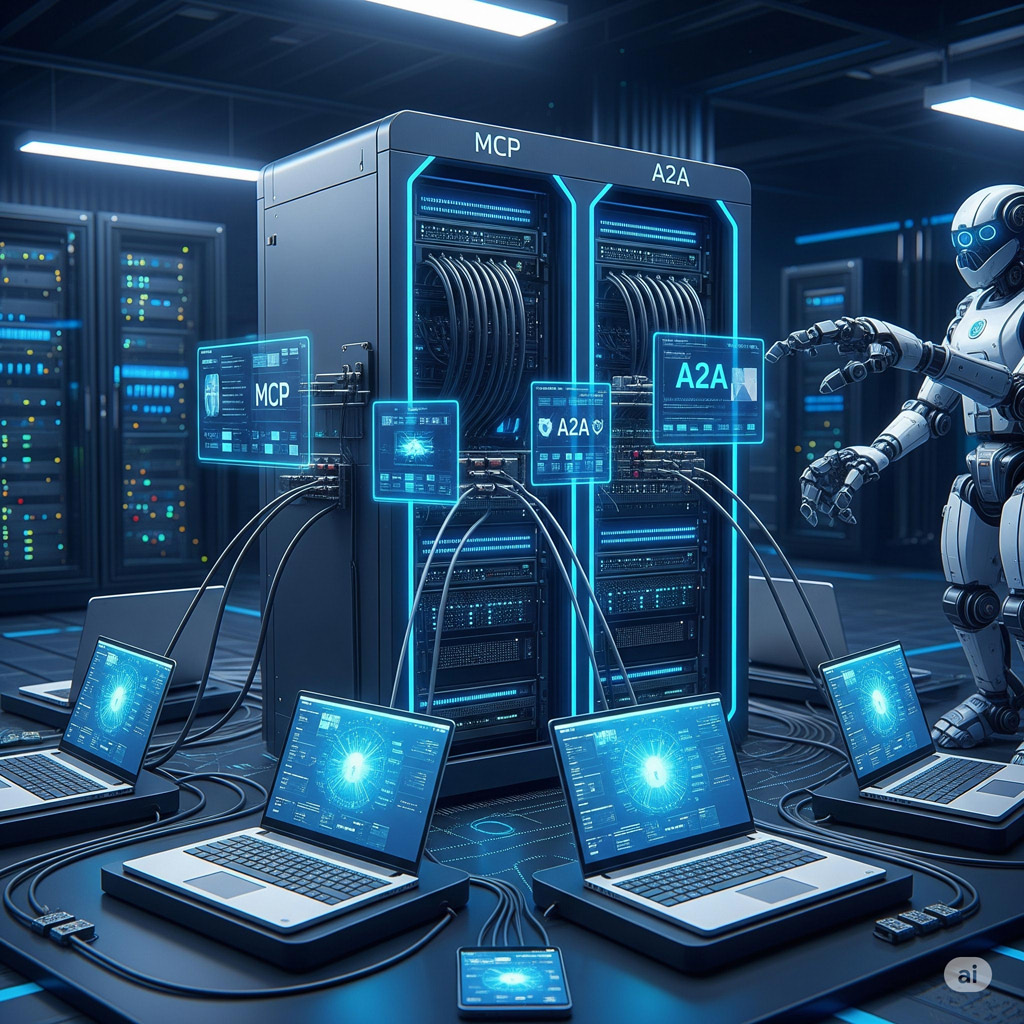
A new unified Google Apps Script now deploys both Model Context Protocol (MCP) and Agent2Agent (A2A) networks as a single server, streamlining AI model integration for Google Workspace users.
Introduction
The rapid growth of generative AI has led to increasing integration between AI models, exemplified by protocols like the Model Context Protocol (MCP) and Agent2Agent (A2A) Protocol. Recently, I released MCPApp and A2AApp, which establish the MCP and A2A networks using Google Apps Script. Ref and Ref This approach offers significant advantages for users of Google Workspace and Google APIs, as it enables seamless authorization and integration of these resources directly within the applications.
A2AApp was updated to v2.0.1
-
v2.0.1 (May 29, 2025)
- From v2.0.1, A2AApp can also be used as a library. Ref
You can see the detail information here https://github.com/tanaikech/A2AApp
Gists
Abstract
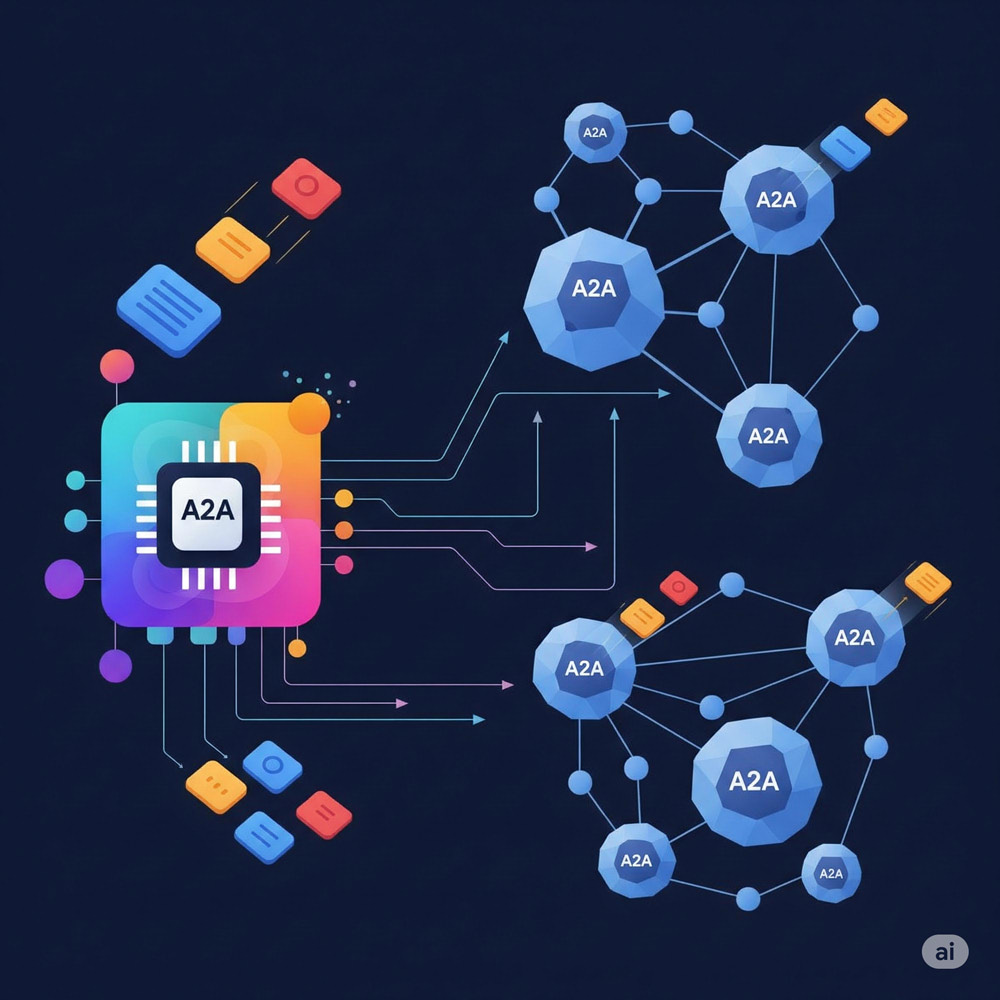
This report details the Agent2Agent (A2A) network built with Google Apps Script’s Web Apps. It facilitates communication between diverse AI agents, overcoming platform limitations. Key improvements include parallel task execution with asynchronous processes and enhanced security through secure access token handling and user-specific Web App availability, demonstrating a robust and secure A2A implementation.
Introduction
This report details an updated implementation of Agent2Agent (A2A), an open protocol designed to enable communication and collaboration between diverse AI agents. The goal of A2A is to overcome limitations of isolated platforms, allowing AI agents to work together on complex tasks while maintaining their internal structures. I recently published a report titled “Building Agent2Agent (A2A) Server with Google Apps Script”. Ref This updated report focuses on successfully creating an A2A network using Google Apps Script’s Web Apps functionality.
Gists
Abstract
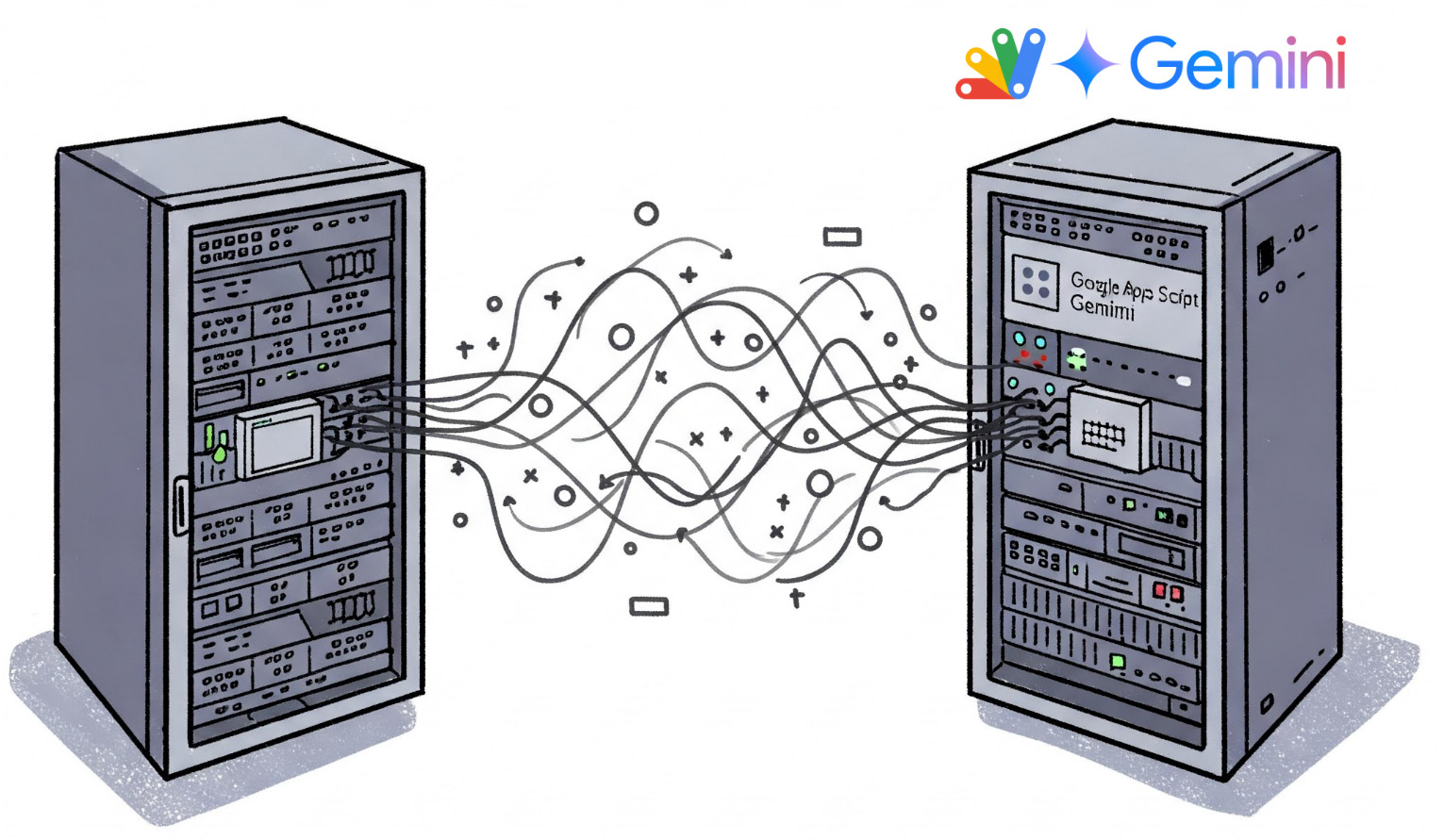
Exploring Agent2Agent (A2A) protocol implementation in Google Apps Script seamlessly allows AI agents to access Google Workspace data and functions. This could enable complex workflows and automation, overcoming platform silos for integrated AI applications.
Introduction
Agent2Agent (A2A) is a proposed open protocol facilitating communication and collaboration among diverse AI agents, aiming to overcome platform silos and enable complex tasks while preserving agent opacity. This report examines the feasibility of implementing a core A2A server component using Google Apps Script within Google Workspace. Such an implementation could seamlessly allow AI agents to securely access and utilize data and functionalities across Google services like Docs, Sheets, and Gmail via a standardized protocol. This would enable sophisticated AI-powered workflows and automation directly linked to user data. A sample script demonstrates the technical potential despite the current lack of a dedicated Apps Script SDK for A2A. While acknowledging potential Apps Script limitations, such as execution time, this exploratory approach remains valuable for developing internal or user-centric AI applications and integrations within Google Workspace. A successful demonstration could potentially highlight the capabilities of Google Apps Script.