Published: January 3, 2026
Author: Kanshi Tanaike
Abstract
Analyzing StackOverflow data (2008–2026) reveals a massive activity decline post-ChatGPT. Using Google Apps Script as a case study, this report quantifies the migration from human support to AI. We explore how the platform is pivoting from a help desk to a critical verification layer for AI-generated code to prevent model collapse.
Introduction
On StackOverflow, millions of developers engage in daily knowledge exchange, creating a historical repository of technological evolution. A prime example of this ecosystem is the google-apps-script tag. Having participated in this community for years, I have observed its threads evolve in tandem with Google’s platform updates.
This report analyzes this evolution not merely as a singular metric, but as a broader indicator of developer behavior in the AI era. We examine changes in question volume, active participants, and associated tags. In this seventh report of the series, we utilize statistical analysis to demonstrate how the google-apps-script tag serves as a “canary in the coal mine” for the wider StackOverflow ecosystem, particularly following the disruptive introduction of Large Language Models (LLMs).
Previous reports (1 through 6) can be found in the References section.
Experimental Procedure
To provide historical context, we established the timeline of the platforms involved:
- 2008-09-15: StackOverflow was launched. Ref. 8
- 2009-08-19: Google Apps Script was released. Ref. 9
- 2011-08-29: The
google-apps-scripttag was created on StackOverflow. Ref. 10 - 2022-11-30: ChatGPT, the catalyst for the generative AI boom, was released.
Google’s official support documentation explicitly directs technical questions to StackOverflow, endorsing it as the primary support channel. This makes the tag a highly reliable historical record.
Data Acquisition Methodology
All data for this report was accessed via the StackExchange Data Explorer Ref. 11. The analysis covers the period from January 1, 2008, to January 1, 2026, reflecting the database state as of January 3, 2026.
The figures were created using the following methods:
- Fig. 1, Fig. 2, Fig. 3 (GAS Specifics): Extracted using queries targeting the
google-apps-scripttag to count total questions, answers, solved/closed statuses, and unique questioners and answerers. Ratios in Fig. 3 were calculated by dividing total questions by the number of unique participants per year. - Fig. 4, Fig. 5 (Global Macro Trends): Fig. 4 represents the aggregate annual volume of all questions across the entire platform. Fig. 5 calculates the ratio of questions containing AI-related keywords or tags relative to the total question volume.
- Fig. 6 (Comparative Language Analysis): Data for specific programming tags (including
javascript,python,go,rust, andswift) was collected and normalized. The reduction rate from 2023 to 2025 was calculated as an absolute value to visualize the impact of AI across different languages.
1. Case Study: Empirical Analysis of the Google Apps Script Ecosystem
To understand the structural shifts in developer communities, we first examine the google-apps-script (GAS) tag. This case study illustrates the transition from human-centric support to AI-assisted development.
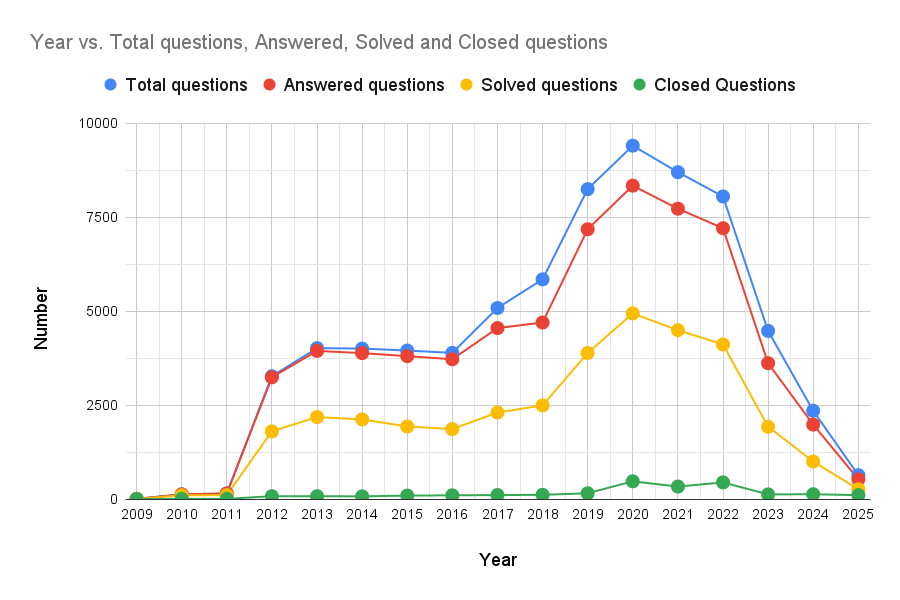
Fig. 1: Year vs. Total questions, Answered, Solved and Closed questions
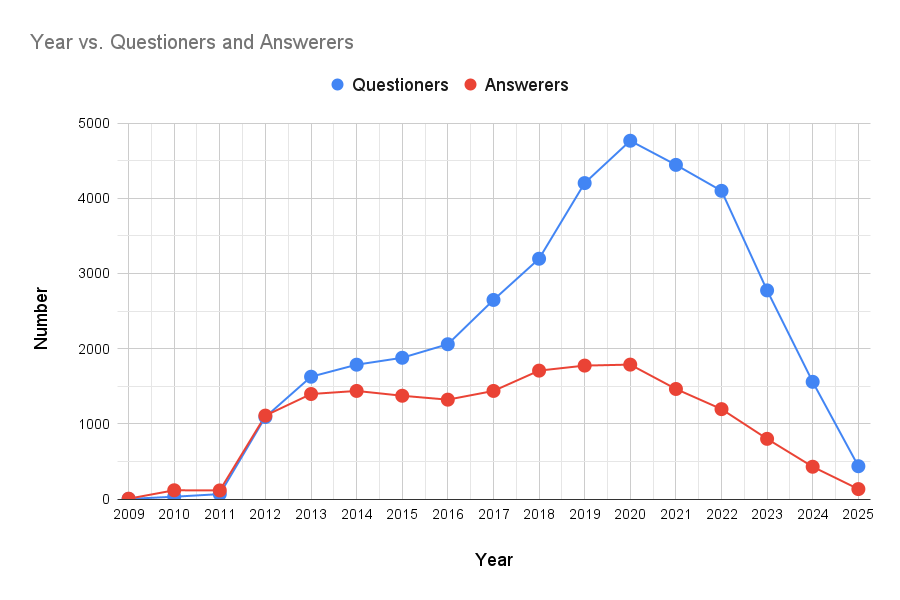
Fig. 2: Year vs. Questioners and Answerers
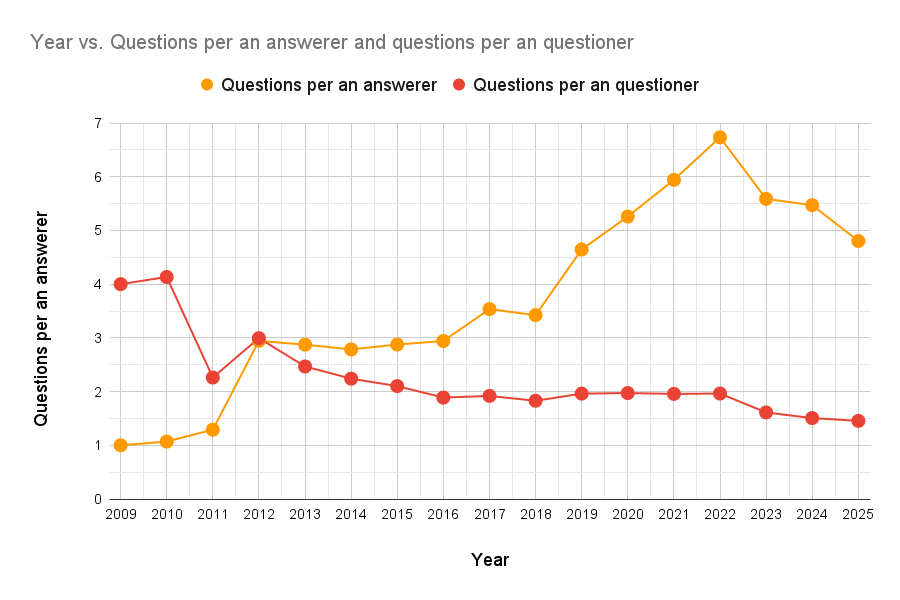
Fig. 3: Year vs. Questions per answerer and questions per questioner
1.1 The Decade of Growth and the Pandemic Peak (2009–2020)
As illustrated in Fig. 1, the GAS community experienced a steady upward trajectory for over a decade. A significant inflection point occurred in 2020, where “Total questions” reached a historical peak of 9,397. This surge is mirrored in Fig. 2, which shows the number of unique “Questioners” peaking at approximately 4,800.
This growth period aligns with the global COVID-19 pandemic, which catalyzed a massive demand for digital transformation (DX). The widening gap between “Total questions” (blue) and “Solved questions” (orange) in Fig. 1 during this period indicates that while volume grew, the community’s capacity to provide “Solved” status began to stretch, despite a steady increase in active “Answerers.”
1.2 The “ChatGPT Shock” and Precipitous Decline (2021–2026)
The data reveals a stark “structural break” following the public release of ChatGPT in late 2022. According to Fig. 1, all metrics related to question volume entered a state of precipitous decline. By 2024 and continuing into 2026, total questions plummeted to levels not seen since 2011.
More critically, Fig. 2 demonstrates a “hollowing out” of the community. The number of active Answerers dropped significantly from 2022 to 2026. This suggests a substitution effect: developers who previously sought human-mediated solutions have migrated to AI. The immediacy of AI-generated GAS scripts has effectively rendered the traditional “post-and-wait” model of StackOverflow obsolete for routine automation tasks.
1.3 Statistical Analysis of Expert Burden
The shifting dynamics are clearly captured in Fig. 3. Just prior to the AI boom (2022), the ratio peaked at nearly 6.7 questions per answerer. This indicates a high “expert burden,” where demand significantly outweighed the supply of human contributors.
Following 2022, this ratio began to decline. This normalization suggests AI has acted as a “relief valve,” absorbing the high volume of low-complexity, repetitive queries that previously overwhelmed human experts, leaving only the complex problems for the community.
2. Macro Analysis: Global StackOverflow Trends
Expanding beyond the specific case study, we analyzed the entire dataset of StackOverflow questions to determine if these trends are universal across the IT landscape.
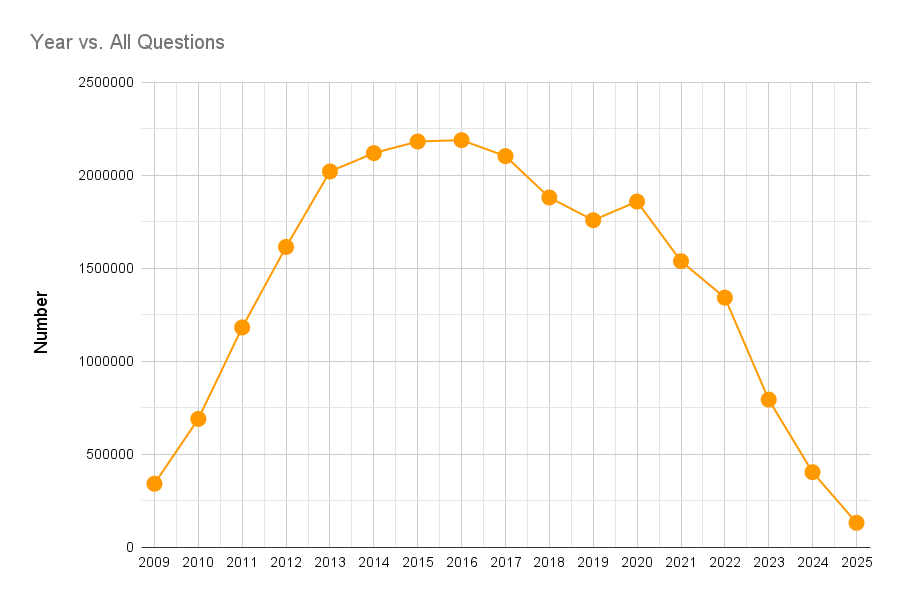
Fig. 4: Year vs. All Questions
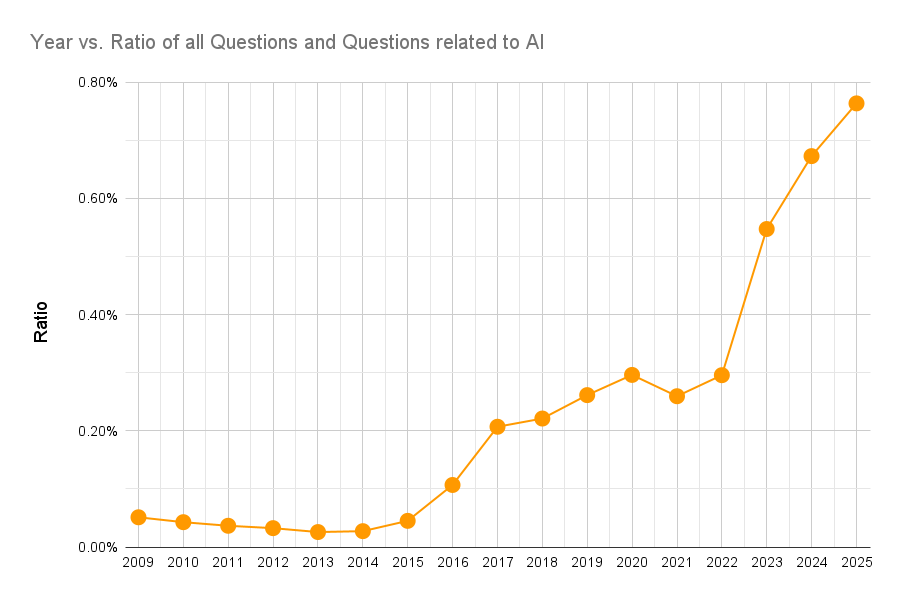
Fig. 5: Year vs. Ratio of all Questions and Questions related to AI
2.1 Market Maturation and Saturation (2009–2020)
As illustrated in Fig. 4, total question volume experienced rapid exponential growth from 2009 through 2016, driven by the mobile app and web technology boom. Between 2016 and 2020, volume plateaued at approximately 2.1 million annually. This phase represented a “saturation of existing knowledge,” where users could frequently find existing solutions via search engines without posting new queries.
2.2 The Post-2022 Collapse
A highly significant trend is the decline observed from 2022 onwards. The volume of questions dropped from approx. 1.86 million in 2020 to projected lows of 130,000 in 2025—a fraction of the peak volume. This decline is inferred to be a direct consequence of the generative AI boom.
Conversely, Fig. 5 reveals that the “AI-related question ratio” surged from 0.29% in 2022 to 0.76% by 2025. This confirms a rapid shift in developer interest from “general programming” to the “integration of AI.”
3. Comparative Analysis by Programming Language
To understand the nuance of this decline, we broke down the reduction rates by specific programming language tags.
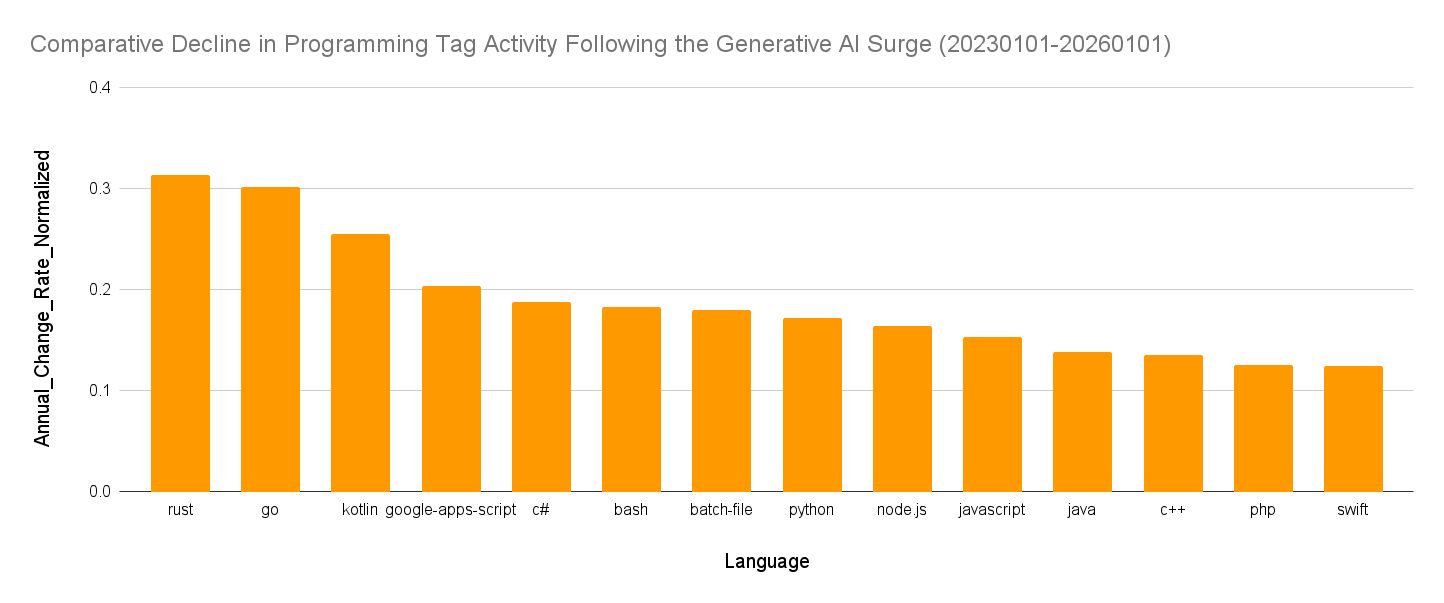
Fig. 6: Comparative Decline in Programming Tag Activity Following the Generative AI Surge (20230101-20260101). This chart utilizes absolute values; a larger y-axis value indicates a greater ratio of reduction.
3.1 Discussion: The Impact of Generative AI on Programming Tags
Based on the calculated normalized change rates shown in Fig. 6, we can categorize languages by their resilience to AI disruption.
1. Rapid Downturn in Modern Languages (Rust, Go) Rust and Go exhibit the most significant rates of decline. While these languages were on an upward trend until 2022, they experienced a sharp drop post-ChatGPT. Because these languages have strict syntax and steep learning curves, beginners have likely shifted to AI for immediate, real-time debugging of compiler errors rather than asking humans.
2. Standardized Decline in Scripting Languages (Python, Apps Script) Google Apps Script (0.2041) and Python show significant declines. Users seeking “quick scripts” for office automation were likely the first to transition from search-based troubleshooting to direct prompt-based generation.
3. Resilience of Legacy and Enterprise Languages (PHP, Swift) Languages like PHP and Swift showed the lowest relative rates of decline. These languages are often embedded within massive legacy systems or specialized frameworks. While AI can generate isolated snippets, resolving issues within complex architectures requires deep contextual understanding, keeping the human experts on StackOverflow relevant.
4. Future Outlook: The Symbiosis of AI and StackOverflow
The empirical evidence suggests StackOverflow is not dying, but undergoing a necessary metamorphosis. The future of the platform lies in three key areas:
The Verification Layer: As the internet floods with AI-generated code, the “Solved questions” on StackOverflow are transitioning from “Help Desk answers” to “Ground Truth.” Human validation is becoming the premium service.
Prevention of Model Collapse: Future generative AI models require fresh, human-generated data to avoid “model collapse” (the degradation of quality when AI trains on AI-generated data). StackOverflow experts will play a vital role in generating the edge-case data required to train the next generation of models (GPT-6 and beyond).
The Canonical Archive: AI excels at the “average” use case. StackOverflow is evolving into a repository for the “exceptional” use case—complex, multi-system architectural problems that exceed the context windows and reasoning capabilities of current AI.
Summary
The analysis of StackOverflow data through January 2026 leads to the following conclusions regarding the relationship between developer communities and Generative AI:
- Structural Break in 2022: The release of ChatGPT created a distinct inflection point, causing a precipitous decline in total question volume across the platform and ending a decade of growth.
- Substitution Effect: The
google-apps-scriptcase study confirms that developers have replaced human-mediated Q&A with AI generation for routine coding tasks, resulting in a hollowed-out community structure. - Reduced Expert Burden: The decline in question volume has normalized the “questions per answerer” ratio, indicating that AI is acting as a filter for low-complexity queries that previously overwhelmed experts.
- Differential Language Impact: “Strict” languages like Rust and Go faced the steepest declines as AI excelled at syntax debugging, while legacy-heavy languages like PHP remained more resilient due to architectural complexity.
- Platform Repositioning: StackOverflow is transitioning from a high-volume “help desk” to a high-quality “verification layer,” providing the essential ground truth required to validate AI outputs and prevent model collapse in future AI training.